
Feathered Bug Patrol
in a British Columbia Xeric Garden
Birds are always welcome in my xeric garden; their cheerful chirping and flashing wings as they chase insects, checking out the treetops is a constant source of entertainment.
They are one of my greatest joys, as I’m sure they will be for you too.
If you’re lucky enough to have a garden pond, birdbath or dripping tap, you’ll attract birds.
Putting nest boxes where they can safely raise their young will also make them feel welcome.
Xeric garden birds will be your constant companions as they flit about the shrubs and trees in your garden, looking for bugs and seeds and keeping a close watch on pests for you.
The smaller types of birds such as chickadees, nuthatches and golden crowned kinglets will hang around together in what’s called a ‘guild’, flocking to the next attraction and the next throughout the day.

They seem to know that they’re all in it together, and where you see one, there will be the others.
Feeding the Birds
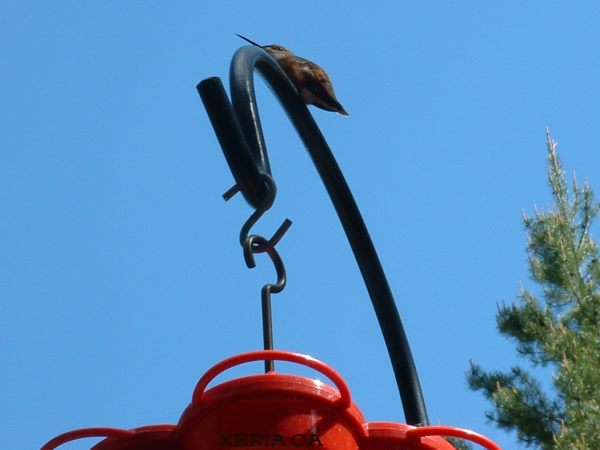
Hummingbirds are tenacious and cheeky. They’ll inspect to see if your feeders are up the last week in April, and then they’ll stick around for the summer if you keep them filled with sugar water
If you feed the birds during the colder months with sunflower seeds, other seeds or suet, be prepared to continue all winter until the spring comes as they’ll rely on you for food.
If you have to go away, please make sure someone can take over and fill the bird feeders in your absence. They can die without your help once they become used to the handouts.
It’s best to only fill the feeders after they have had a chance to glean some natural foods; after all, it’s to their benefit (and ours) for them to eat a few overwintering bugs.
Hummingbirds are eager to feed on flowers, but until they open, you may want to use a hummingbird feeder to give them a boost until then.
I usually put the feeders up and let them have a feed, but then to encourage those early ones to move on (especially the aggressive male Rufous hummingbirds) I’ll take it down for a few days.
Otherwise, that’s all you’ll get – one seriously territorial rufous and all the others will go hungry.
Get the scoop on wild birds and feeders.
Here’s a list of the birds I see throughout the year:
Mountain chickadee
Black capped chickadee
Red breasted nuthatch
Brown creeper
Song sparrow
Chipping sparrow
Swainson’s thrush
Downy woodpecker
Hairy woodpecker
Yellow naped sapsucker
Pileated woodpecker
House wren
Crossbill
Evening grosbeak
Pine grosbeak
Cedar waxwing
Hummingbirds including
Annas hummingbird,
Rufous hummingbird,
Calliope hummingbird
Broad Tailed hummingbird
Whiskey jack
Stellars jay
Pine siskin
Western tanager
Yellow rumped warbler
Townsend warbler
Tennessee warbler
Townsend solitaire
Northern pygmy owl
Western screech owl
Ruby crowned kinglet
Golden crowned kinglet
American robin
Dark eyed junco
Rufous sided towhee
Western Bluebird
Empidonax Flycatcher
Galliform birds such as
wild turkeys,
ruffed grouse, sharp tailed grouse
and California quail.
kestrels
falcons
hawks
black vultures
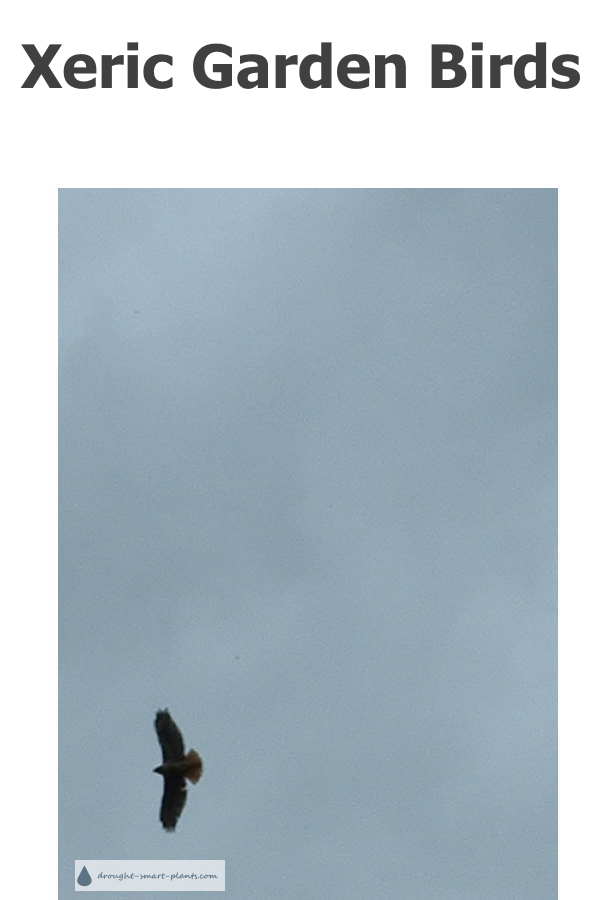
Other visitors to your garden may not be as welcome – birds of prey sometimes swoop down on an unsuspecting chickadee with a poof of feathers, but they perform a valuable service.
Keeping the flock strong by taking sick or slow birds improves the overall health of all the remaining birds by preventing the spread of disease.
Five Ways to Make your Garden Bird Friendly;
- Have varying heights of shrubs and trees in your garden. Although large conifers offer songbirds a place to sing from, they’ll value deciduous second story trees to nest in.
- Keep your cat indoors or belled to prevent them from catching unwary migratory birds.
- Live with a few bugs – that’s what the parent birds feed to their young. No groceries mean fewer youngsters to return next year.
- Think bigger picture, with time being the ‘other’ dimension. Plant flowers that will offer seedheads for autumn forage, as well as places to hide. In spring, the standing dried flowers of many perennial plants will create a microclimate with overwintering insects, newly sprouted seeds and other early food sources.
- A slightly untidy garden will be more useful to birds than an immaculately manicured lawn with no shrubs, nesting material producing weeds and varied trees for cover.
In summer, as soon as the weather starts to warm up in early spring, you might be fortunate to have hummingbirds visit to check if you have your feeders up yet.
They seem to know where people put them, as they’ll check on house corners and in front of windows.
Planting some tubular flowered vines, fast growing shrubs, wildflowers and plants for hummingbirds will help to keep them close by if you don’t want to fill feeders for them.
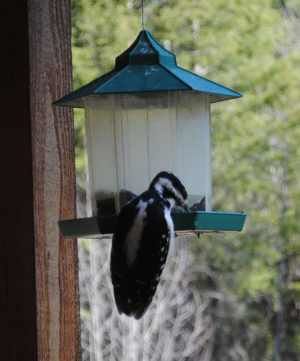
Woodpeckers are a familiar sight in my xeric garden, as there are many native pine trees infected with the pine beetle.
Sad though it is to see the trees weep thick resin and the needles slowly turning a telltale rusty brown, it’s heartening to think that the death of one type of life form can be the survival of another.
Recently, I’ve seen many more pileated woodpeckers which are about the size of a crow with a white chest and vivid red head. I’m thinking they might be thriving due to the pine beetle larvae that they can access in the surrounding forest.
Woodpeckers can be annoying in the spring with their incessant courtship calls and hammering on hollow stumps or telephone poles but it’s a small price to pay for the benefits of their presence.
Whatever size or shape they are, and whatever niche they fill, birds are always welcome in my xeric garden.
Migratory songbirds of all descriptions join the flurry and flutter of activity; finding a mate, building nests in wildlife trees and nest boxes and visiting the pond for a drink and a bath.
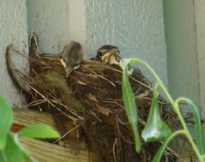
Baby birds have voracious appetites, keeping their parents hopping filling the gaping maws.
This frantic activity lasts only about two weeks until the nestlings graduate to fledgling status and leave the nest.
It takes them a day or two to get up the nerve, then they’re flying.
By the time fall arrives, all the youngsters are on their own, getting ready to either spend the winter close by the feeders, or migrate to warmer climes with flocks of other migrating birds.
Getting lots of birds hitting the windows? Find out how to prevent bird strikes here (opens in a new window).