
How to Make More Plants from Cuttings
My stock in trade, and my passion, is vegetative propagation; from cuttings – softwood, hardwood, semi-ripe; layering; grafting; you name it, I’ve had fun exploring the techniques and having many failures, and some successes.
Although I’m also very keen on making more plants with seed growing and other techniques, taking cuttings is my all time favorite occupation in the greenhouse.
Vegetative propagation ensures that each new plant is genetically identical to the parent, unlike seed propagation where you will get genetic variations with each seedling, leading to new varieties.
However, if you want more of the same named variety or species to increase your stock, vegetative propagation is the technique to use.
Propagation of all kinds is what I live for – whether it’s vegetative propagation, grafting or growing new plants from seeds that I collect from my garden. Taking cuttings, though; that’s my absolute favorite thing.
Many hardy succulents are exceptionally easy to propagate using vegetative propagation methods such as softwood cuttings; the biggest problem is finding new places to plant all the great plants you will grow.
I’ve found that if I buy a plant from a garden center or nursery, sometimes it doesn’t do all that well for me.
Oddly enough, if I ‘liberate’ a cutting, get one given to me, or swap with someone, I have no problem growing a gorgeous healthy plant, perfectly adapted to my conditions.
I’m not sure what the issues are; possibly different conditions of soil or sun exposure that a new cutting will adapt to while an established plant can’t make the adjustment.
It could have to do with poor root growth in the existing media. Whatever it is, it’s easily solved by propagating a new plant by taking a cutting.
Now I routinely propagate a replacement plant of any new succulents for insurance, just in case I lose the original plant.
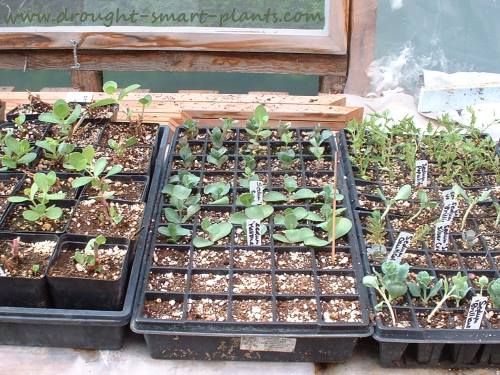
I use vegetative propagation to grow many plants for sale in my nursery.
Especially important as a crop are the many varieties and species of Sedum for green roofs.
In some cases, the requirement can be in the thousands for a major project, so luckily, I can grow many cuttings in plugs, or even send unrooted cuttings right to the job site.
This option is extremely economical, as the cuttings without soil or containers are light enough to ship very cheaply, and it is almost instant as long as the cuttings are available.
Rooting the cuttings on a green roof is almost identical to rooting them in a greenhouse in plug trays, except for the initial care of planting and watering.
After that, most green roof projects leave the cuttings to their own devices; luckily Sedum will thrive with minimal care and actually prefers benign neglect.
Many Sedum varieties will form lots of thread like pink roots simply laying on the surface of the soil, either still attached to their parent plant, or severed.
This characteristic enables the gardener and avid plants person to increase their stock quickly, as the cuttings won’t need any special care, simply sticking them into plug trays or where they are to grow is enough.
Other succulents require a bit more care, and the occasional watering until roots form.
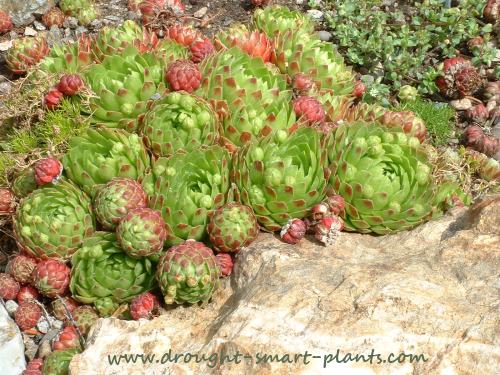
In some cases, vegetative propagation entails pulling off propagules, or the chicks from under the rosette of a Sempervivum or other rosette forming succulent.
The chicks root easily once severed, and you can plug them in to crevices in rock walls, mosaics or tapestry beds.





You might like these
Propagation Tools – Best Tools for Plant Propagation
The Best Tools for Plant Propagation; make your job of growing more plants easier…
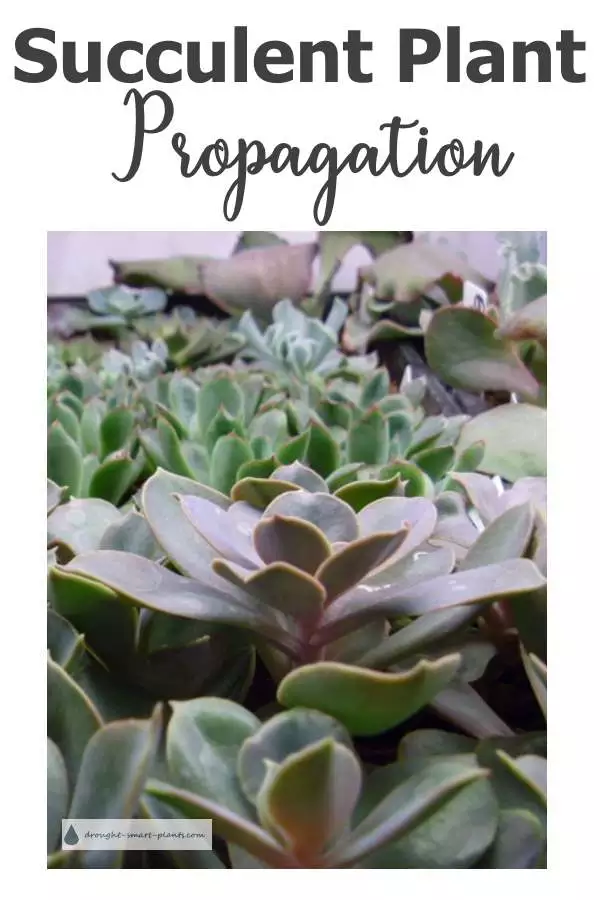
Succulent Plant Propagation – making more plants
Find out all about Succulent Plant Propagation and how to make more of our favorite plants by cuttings, pups and seeds…
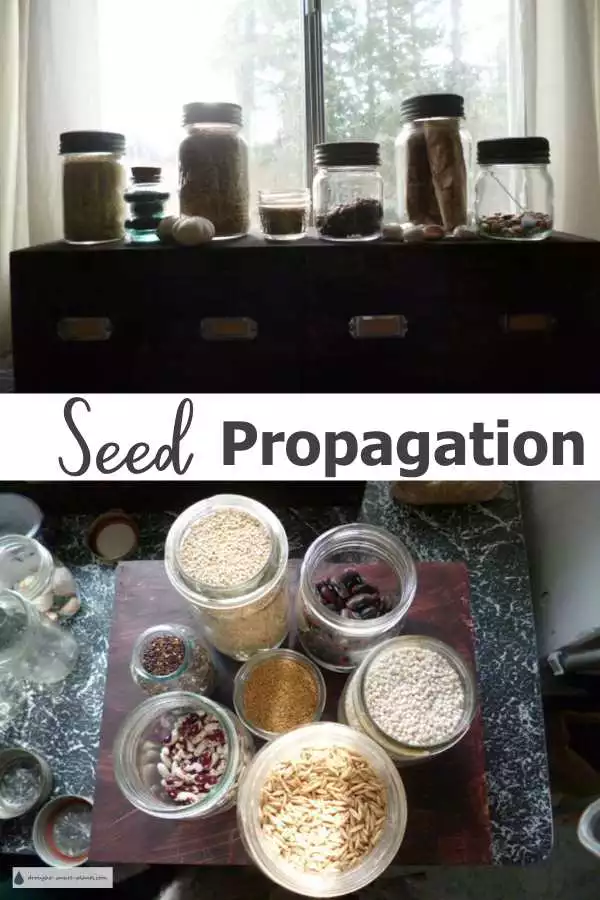
Seed Propagation – a seed is a tiny plant, in a box with its lunch
Learning Seed Propagation opens a whole new world for making more plants; unlike taking cuttings, growing succulents from seed is a challenge, and so much fun…