
Homeowners across the US are giving more thought to their lawns, and those thoughts revolve around moving away from the antiquated flat grass lawns that require heavy maintenance and care, and toward a better, more eco-friendly lawn solution.
That’s where the thyme lawn comes in, and we’re going to take a deep dive into what a thyme lawn is, why you may want one, and how they can best a traditional lawn in almost every way.
We’ll show you how by embracing the power of these little resilient, low-maintenance plants, you can say goodbye permanently to watering schedules, high water cost and consumption, and the constant need for mowing.
What Is A Thyme Lawn?
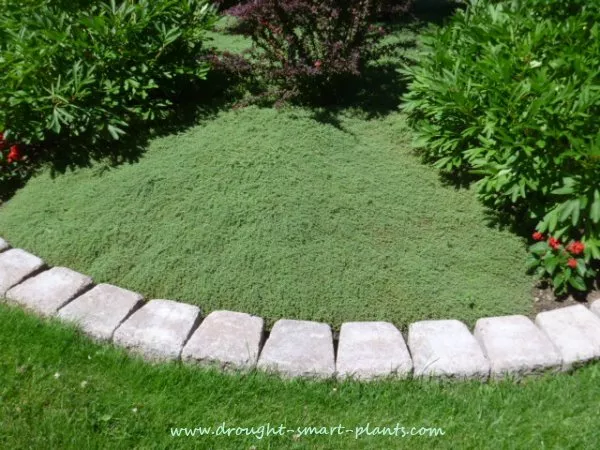
A thyme lawn is a type of lawn or ground cover created by planting thyme, which is a hardy, low-growing perennial herb, instead of the traditional grass blends.
This type of lawn is native to the Mediterranean region, and has more than 350 species, with many of the most common ones being used for lawns. The most common types of thyme include creeping thyme, woolly, thyme, and elfin thyme. You can find more info about the specific types of thyme here.
Thyme lawns are beloved by those in the know, and they are appreciated for more than just their lush, green appearance and aromatic fragrance, but also for their incredible resilience.
Thyme thrives in well-drained soil, and it is highly drought-tolerant, which makes it a great solution for areas prone to long dry spells, and sporadic water scarcity, or for homeowners that are looking for a strategically low-maintenance alternative to the conventional grass lawn.
Thyme is known as more than just a culinary favorite, it also has medicinal and ornamental uses, making it a true all-in-one solution. This diverse plant creates a pleasant, inviting environment that is full of life and color.
The creeping nature of thyme allows it to create a dense mat that is incredibly effective at controlling weeds. The allure of a thyme lawn goes well beyond the simple aesthetic or even the practical, it represents a proactive shift toward more environmentally conscious and ultimately, sustainable gardening practice.
What Does A Thyme Lawn Look Like?
Thyme lawns are surprisingly sensory-rich.
They are visually stunning, and have a range of colors and textures once established. In the summer they have flowers that can be purple, pink, or white, depending on the variety.
The leaves are small and usually roundish, and the stems have a soft wool on them. The dense mat of a thyme lawn is usually only a few inches high, being similar in height to a grass lawn, but feeling far much cushioned and comfortable.
When it comes to the wildlife it attracts, a blooming Thyme lawn is a magnet for bees, butterflies, and other beneficial insects. These creatures are attracted to the tiny flowers for their nectar and pollen, making a Thyme lawn an excellent choice for supporting local biodiversity.
Why Grow A Creeping Thyme Lawn?
Creeping thyme, specifically Thymus serpyllum or “Mother of Thyme”, is a very common variety used to populate thyme lawns.
It’s highly resilient and tolerant to a wide range of conditions, has solid aesthetic appeal, and its low requirements for maintenance make it a great choice for homeowners that are looking for a better lawn option than grass.
Here are some of the biggest reasons that people are choosing creeping thyme for their thyme lawns.
Drought Resistance
One of the biggest and most common reasons that people choose a thyme lawn is its extraordinary resilience in the face of water scarcity.
Thyme is very drought tolerant, which makes it ideal for areas or regions that have low rainfall, and high water costs, or for homeowners that are simply looking to save water.
Unlike traditional grasses, thyme doesn’t turn brown or wilt, and once it has established itself, it requires far less water than traditional lawns, saving water, saving money, and helping to save the planet.
Durability and Adaptability
Another massive benefit to having a thyme lawn is the plant’s ability to handle a wide range of soil conditions.
While it thrives in well-drained somewhat dry soil, it can even grow in poor, rocky, and sandy soils where many other plants will struggle. This core adaptability makes thyme a highly versatile choice for various garden and lawn situations.
The durability of thyme is also perfect for lawns that see traffic.
While not suited to high-traffic or intense use like sports fields, they can comfortably handle light foot traffic and the occasional vehicle, making them great for low-use areas like pathways and patios.
Suitable for a Range of Plant Zones
Thyme is a robust and adaptable plant that can grow in a variety of climates. It’s suitable for USDA hardiness zones 4 through 9.
This wide range means it can survive cold winters as well as hot summers, making it a viable option for various geographical locations, and in nearly all areas of the US.
Eco-Friendly
Thyme is the perfect eco-friendly opposite to grass. It needs very little water, but it also needs less maintenance, so less gas, and oil in your mower. Not only that, but it is a haven for countless species of insects, contributing in a significant way to local biodiversity.
Planting A Thyme Lawn
Even if switching to a thyme lawn might seem like a massive, intimidating project, the process is pretty simple. Here’s what to expect.
Preparation
Just like any other plants that you’d want to add, thyme needs certain things to do well.
It prefers well-drained soil and full sun. Start by choosing an appropriate location based on these criteria, and if your yard has heavy clay soil, consider improving it with compost or grit to boost drainage.
Then remove all of the existing grass and weeds from the area, so the thyme has the resources it needs.
Planting
You can plant thyme from seeds, but it’s generally more effective to plant young thyme plants or divisions from established ones since they tend to establish faster. Space them roughly 6 to 9 inches apart, then water thoroughly until established.
How much light does creeping thyme need?
As mentioned, thyme prefers full sun but can tolerate partial shade. That said, in areas with intense summer heat, afternoon shade can be beneficial in preventing scorching. Too much shade will often result in leggy, flowerless plants.
How often do I need to move a thyme lawn?
Your thyme lawn will need very little mowing compared to grass. However, you’ll still need to dust off that mower about once a year. You’ll want to mow once in late winter or early spring to help rejuvenate the plant. Keep your mower set high to avoid damaging the plants.
What Kind of Soil is Best for Thyme?
Adding drainage to your area is crucial if the soil drains slowly, such as clay soil. I recommend adding small gravel such as pea gravel or graded sand to the area then rotor tilling it in to a depth of between two and six inches.
Don’t use fine playground sand or beach sand, which could have salt in it. Rake this out, then you’re ready to plant your thyme plugs.
How Many Thyme Plants Will I Need
To calculate how many plugs you’ll need, measure the area you want to plant, multiply length x width. To plant 30cm (one foot) apart, this will give you the number of plugs to order.
Using this quantity, your thyme lawn will eventually fill in – this can take several seasons, depending on the variety or species. To plant 20cm (8″) apart, which is my recommendation, add about a third again.
Most varieties do well at the closer spacing, especially for projects that will be used for light foot traffic. Some of the best types of thyme for a thyme lawn are Thymus serpyllum ‘Elfin’ (Elfin thyme), Thymus coccineus (Red Creeping thyme) and Thymus pseudolanuginosus (Wooly thyme).
These are all very short and don’t produce much long top growth, which would be a tripping hazard. This type of lawn is not going to be tough enough for a rousing game of touch football, or frantic fetch games with the dog, but it will stand up to light foot traffic, or seating.
Avoid the area when the flowers bloom, due to the risk of getting stung by a busy pollinator gathering the nectar.
Maintaining A Thyme Lawn
Maintaining a Thyme lawn is generally less labor-intensive than a traditional grass lawn. However, you will need to take a few basic steps to ensure your Thyme lawn remains healthy and vibrant for years to come.
Trimming
Thyme is a sprawling plant, and as such, it may occasionally creep beyond your lawn’s boundaries or otherwise invade areas it’s not wanted. Regular trimming can keep this in check, and you can trim any dead or brown patches as well to encourage new growth.
How often do you water a thyme lawn?
Thyme is a very drought-tolerant plant, and since it doesn’t need much water, overwatering can cause harm. It can lead to root rot, which cannot be fixed easily.
Do thyme lawns need fertilizer?
While it does need resources, having soil that is too heavily fertilized can lead to leggy plants and a diminished flavor profile in the leaves if used for cooking. If your soil is relatively poor, consider a light application of balanced, slow-release nutrients in the spring.
Pest and Disease Control
While thyme is usually pest-resistant, it can attract certain pests, like aphids and spider mites.
By regularly monitoring the health of your thyme lawn, you’ll be in a great position to spot any problems early. If you notice any pests, use an organic pest control method to minimize the harm to other beneficial insects.
Thyme can also sometimes be prone to plant diseases, like fungal infections. This is particularly true for areas that experience high humidity and poor air circulation. Ensuring your thyme lawn is not over-watered and is in well-drained soil can help mitigate the risk of most problems like these.
The biggest key to keeping your thyme healthy is balance. By providing the right conditions and using minimal intervention, you’ll be better equipped to cultivate a resilient, fragrant, and vibrant thyme lawn.
Wrapping Up
Thyme lawns are the perfect combination of beauty and practicality.
With their lush, green hues, alluring aromatics, and resilient nature, they bring the ideal grass alternative to the table.
Even more importantly, they represent a significant stride toward more eco-friendly landscaping practices, which is a path that every homeowner should give serious consideration.
In a world where individuals are becoming increasingly conscious of their impact on the environment and their water consumption, thyme lawns offer a beautiful and sustainable solution. By planting a thyme lawn, you aren’t just transforming your yard and landscaping, you’re contributing to the larger movement of a greener, more sustainable future.
Sources
https://plants.usda.gov/home/classification/46907
https://dpw.lacounty.gov/wwd/web/Documents/DroughtTolerantPlants.pdf
https://www.nwcb.wa.gov/groundcover-alternatives-for-western-wa
If you are looking for even more information about thyme please check out my p
What Other Visitors Have Said
Click below to see contributions from other visitors to this page…

Grass has started in my thyme lawn. How do I get rid of it.? Arlene
I began a thyme lawn in Co. about 12 years ago. The last 4 years wild grass has begun to come in. I cannot pull it all (I’m 83). Help. Arlene

Replaced our lawn with thyme.
When we decided to convert to a grass free lawn in front of our house, we knew nothing about ground covers or drought smart plants. We bought eight …

lawn bunny
Two years ago I created a giant bunny on my front lawn. It’s 20 feet long & 8′ 4″ to the tip of the tallest ear. The base consists of several large …
Wooly Thyme is growing hair?
I have a flagstone patio, about 9 years old set on sand with pea gravel between the cracks. We planted it with Wooly Thyme plugs and it spread rapidly. …
dying thyme
About 20 years ago I planted thyme in my Japanese Garden: woolly thyme, nutmeg thyme and minus thyme all in distinct areas i.e. separated. It took a few …
Thyme Lawn
I just started to grow about 1600 plants of thyme to transplant into my front garden. See the process and the pictures on my Island Gardener blog . …
Thyme Scented Honey
I planted a small thyme lawn several years ago, and finally last year it bloomed. The variety was Elfin thyme which has very pretty pink flowers, and …

Xeric gardening in Chinook country
I have managed to get all our landscaping done along with killing off ALL our grass. I have even begun planting thyme plants that I have been lucky …