
Wire Frames to Display Your Favorite Sempervivum and Succulents
As an Amazon Associate I earn from qualifying purchases.
Other links on this site may lead to other companies that I’m associated with.
Wire topiary frames have been popular for filling with moss and tiny creeping plants but why not make a succulent topiary?

The best plants for this are some of the smaller Sedum for containers as well as my all time favorite, Sempervivum. The textures and colours of a diverse mix of the rosette forming hardy succulent plants are so pleasing to the eye.
Usually, succulent topiaries are filled with some type of moss, either Sphagnum sheet moss or Spanish moss, to hold the tiny bit of soil in place, and then the roots and stolons of the Sempervivum are inserted into the moss.
Mist the plants well then put the finished topiary in a place where it won’t get disturbed until the plants are firmly rooted.
You can easily add more plants if there are bare spots, using a chopstick to make a little hole to insert the roots or stolons of the new plants.
I’ve been known to simply set the unrooted chicks right on the surface of the coir fiber liner, and allow the roots to find their own way through. For an optional technique, look at the topiary turtle that I made, using panty hose to hold the soil.
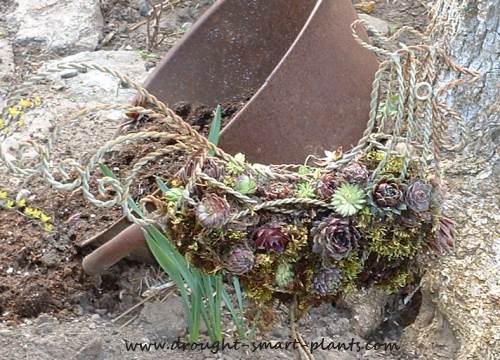
Here’s a brief overview of the project – it’s not that difficult to do, just a bit fiddly. The moss tends to fall apart, no matter how careful you are. Eventually, the roots of the Sempervivum will hold the soil in place.
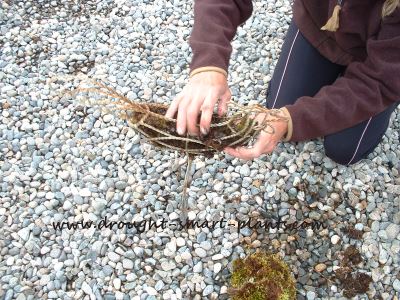
Lining the frame with moss
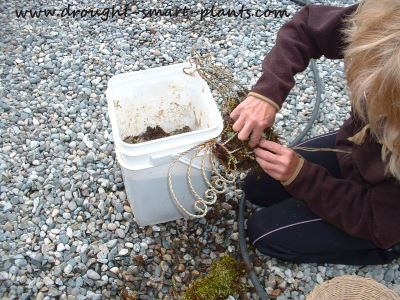
Packing the soil inside the moss
Eventually the whole outside will be covered as the ‘hen’ rosettes have chicks that also root in to hold it all together.
Expect your succulent topiary to take a couple of seasons to completely fill in.
Fertilize with compost tea once or twice a year as the plants start into growth; these types of plants don’t require heavy feeding.
Display your topiary in full sun or part afternoon shade and water about once or twice a week if there is no natural rainfall.
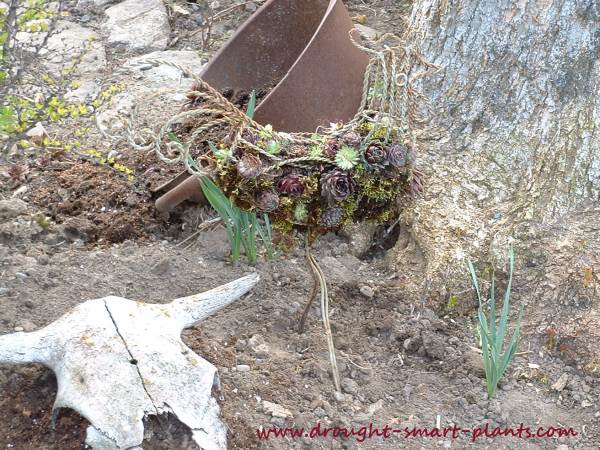
The completed Sempervivum Topiary Rooster
For the winter, if your topiary is filled with hardy succulents it’s best to place it in a bed of leaves as the plants won’t be as hardy out in the open. The roots can be damaged in very cold temperatures, especially if they are wet first.
For tender succulents, take the topiary apart and pot them up to over winter or leave the succulents in the topiary and over winter it that way. Tender succulents can take very dry conditions in the winter, so water sparingly.
See more exciting topiary products from my affiliate.