Mix & Match Succulent Plants, Alpines and Conifers for spectacular results
A succulent planter filled with many mixed succulent plants, alpines and small conifers will make your display look like a rock garden, but it’s much easier to maintain and weed, as well as bringing it up higher to view.
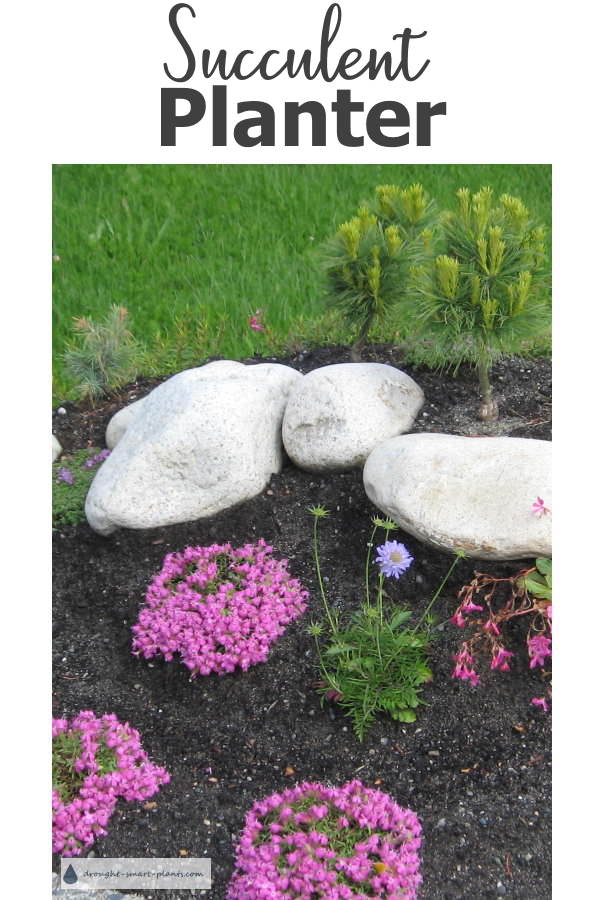
Succulents, alpines and conifers of all kinds combine perfectly in a planter, bowl or container and require very little care – in fact, they thrive on benign neglect.
They need bright light, although in extremely hot conditions such as with reflected light from a building or on a paved area in full sun, they prefer shade in the afternoon or bright filtered light all day.
Try and combine the types of plants that have similar requirements, but don’t be too much of a slave to them – many of the more commonly available types in box stores and online nurseries are there for one simple reason – ease of cultivation.
See the page on succulent care for more information on cultivating succulents of all kinds.
Good drainage is essential as all these desert plants have evolved to live in very harsh and unforgiving environments such as cliffs and rocky plains.
A drain hole or two in the bottom of the pot or container is crucial, as well as gravelly soilless mix.
Don’t make the mistake of using regular garden soil. It will compact too much, preventing drainage, as well as the risk of importing pests.
You can put Styrofoam popcorn or an empty plastic container with a lid to take up some of the space and make the container lighter in weight, or even some empty pop or soda bottles.
This is great for most succulents as they have shallow roots instead of a tap root. This also makes them perfect candidates for planting in driftwood or root planters.
When combining your plants, put the taller ones in the center of a large bowl for drama, with smaller growing and trailing types closer to the edge to billow over and soften it.
Here’s how I plant a container with mixed succulents and other plants for the thickest growth and fullest look:
Fill your planter with soilless mix – a large shallow pot and Sunshine Mix #4 which has additional aggregate for excellent drainage, as well as a water retaining polymer is the perfect combination.
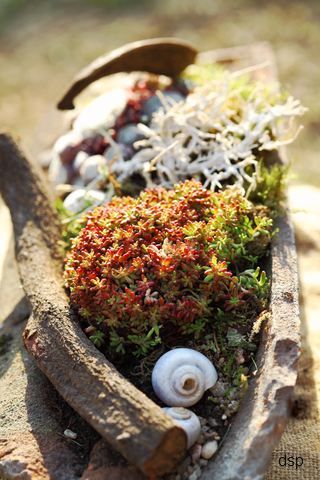
When watering after allowing the pot to dry out as these succulents require, the soil plumps up quickly with moisture, storing it for a week or more even in hot weather.
I simply cut off the tops of the rosettes of many succulents and place them right on the surface of the dry soil mix and lava rock, leaving them undisturbed for a few weeks until they root. This will allow you to place them close together for a lush full look.
In a week or so, water thoroughly and then let the soil dry out again. This makes the new roots follow the moisture down to the lower levels of soil, anchoring the plants securely.
I guarantee you won’t be able to stop at making just one of these spectacular and easy care focal points for your deck or patio.
Succulent Planter Project
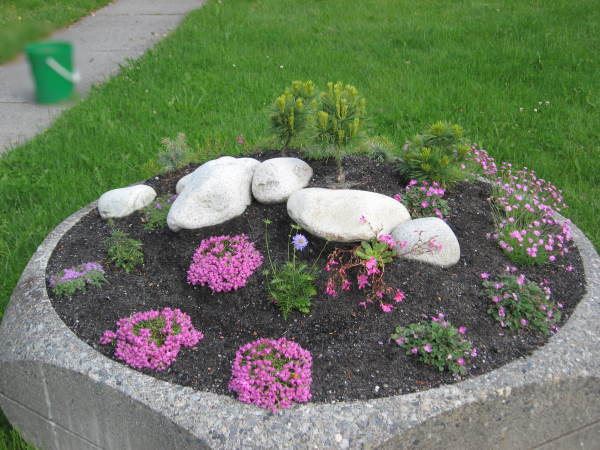
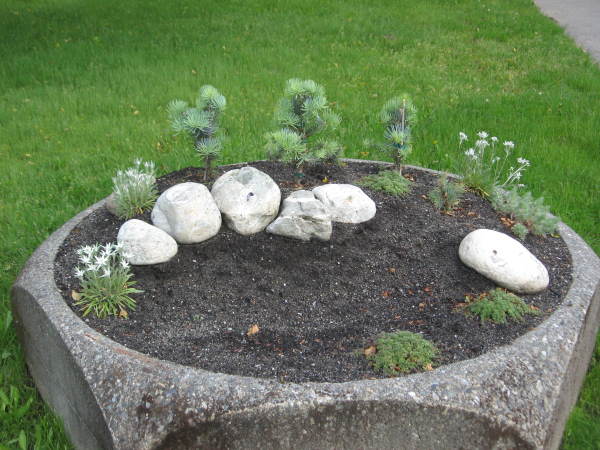
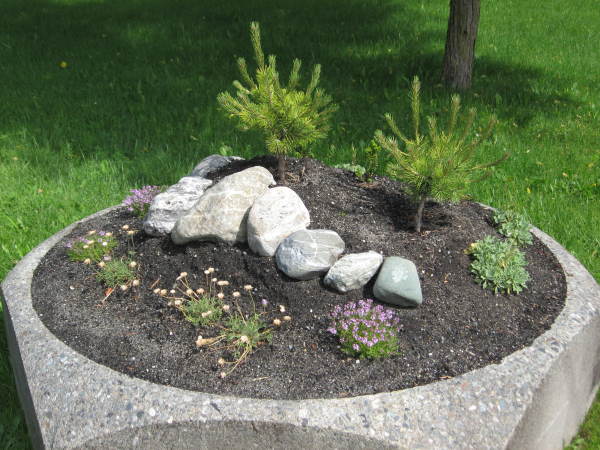
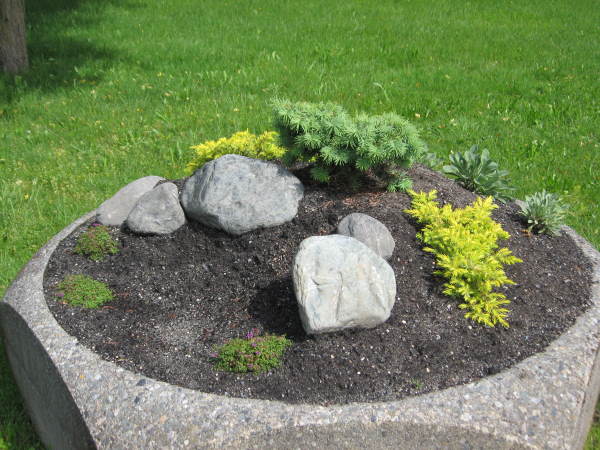
Here’s a project that I’m really excited about; my alma mater, University of Fraser Valley, has agreed to accept a donation of plants from my nursery. The sticking point was actually purchasing some big concrete planters to use.
The good news? The supervisor of the grounds maintenance crew has found some that were in storage, and for the cost of shipping them from Vancouver, he can use them as long as he needs to.
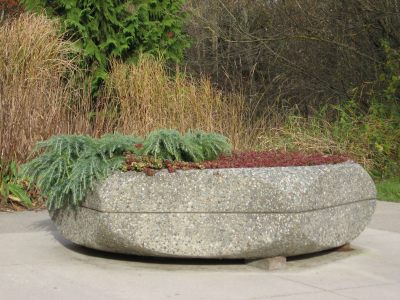
My task is to decide which plants to send to plant in them – I think I got the fun job.
Later; I’ve sent the plants, mostly some hardy succulents that will combine well with the little conifers and some decorative rocks.