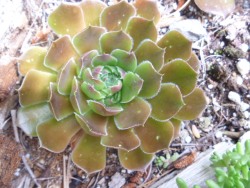
More than just houseleeks and hens and chicks
As an Amazon Associate I earn from qualifying purchases.
Other links on this site may lead to other companies that I’m associated with.
Sempervivum tectorum and other species found in high mountains form the foundation of these interesting and tough yet beautiful plants for our xeric gardens.
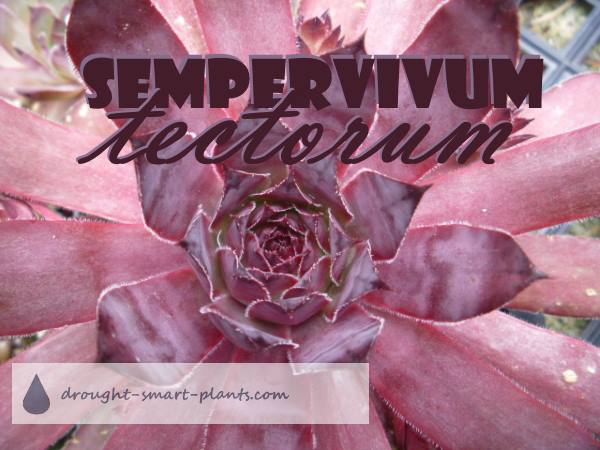
Sempervivum (commonly called hens and chickens plants and also known as houseleek) of all kinds form the backbone of my plant selection for my sedum and succulent nursery.
Even with a collection numbering over 150 named varieties and many more un-named kinds grown from seed, it’s hard to stop collecting the many different species and varieties.
Growing hens and chicks is so rewarding; the sheer variation of these fascinating succulents with characteristics passed down from the original hybridizations is almost infinite.
These plants happily interbreed; sometimes a natural hybrid results, sometimes man made.
Sempervivum tectorum as a species originates in Europe, mostly in the Balkan and Carpathian Mountains.
This might give you an indication of the conditions it prefers – well drained soil, even rocky, with extreme temperatures to provide them with a dormant cold period through the winter months.
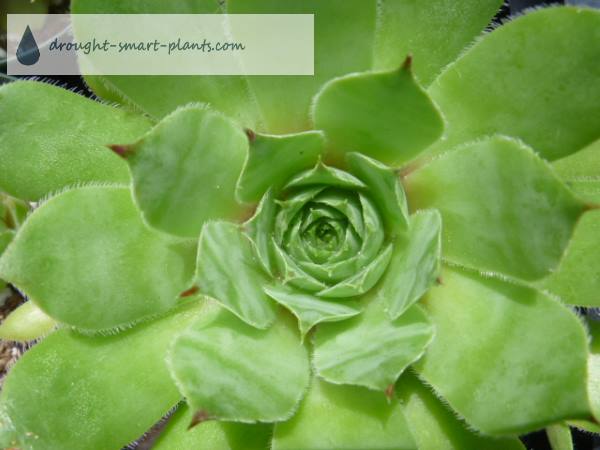
Hens and chickens as they’re known, Sempervivum tectorum are one of the most common types of all the species.
Along with their close cousins, Sempervivum arachnoideum – the cobweb hens and chickens plants, they are one of the base types of most of the known garden hybrid hens and chicks.
They routinely pass along their best attributes – hardy, beautiful glossy or smooth foliage, with the ability to form large colonies of plants.
Planted as a matter of course on roofs in Scandinavia, they also are known as the Beard of Jove, or Jovibarba, which just to complicate things also refers to another genetic relative.
On occasion, Sempervivum tectorum rosettes will elongate into a bloom stalk. It’s unknown what triggers the bloom sequence – stress, heat or drought, or combination of these, along with photoperiod or number of hours of sunlight – no-one has really pinned it down.
It’s so disheartening to wait anxiously for a beloved single rosette to start forming what looks like some chicks, only to find that they are bloom stalks.
Even cutting them off right at the base won’t save the plant, as once they start blooming, it’s inexorable. The plant is doomed. Hopefully, there will be a few chicks to replace the mother rosette.
In any one colony, there will always be a percentage of aging hens that want to bloom; with luck it won’t be 100% of them wiping out your whole collection of Sempervivum tectorum.
Fortunately, Sempervivum tectorum will set seed – keep in mind that it will be hybridized with whatever other kinds of Sempervivum you might have locally, as they are insect pollinated.
This is good in a way, as raising seedlings from your own plants gives you a unique opportunity to see first hand the variability and ease of hybridization of these beautiful and hardy plants. Learn more about starting seeds using the winter sow method.
See many of the gorgeous species and varieties in the Sempervivum Picture Gallery.
See more compatible hardy succulents for your xeriscaping:
Whether you’re seeking the odd and unusual, or something reliable and classic, this list will give you some great choices; click on the plant: