Why do they call it division? It’s more like multiplying!
Everyone at one time or another had a Ginsu knife in their possession – the perfect use for it? Propagating hardy succulents by division, of course.

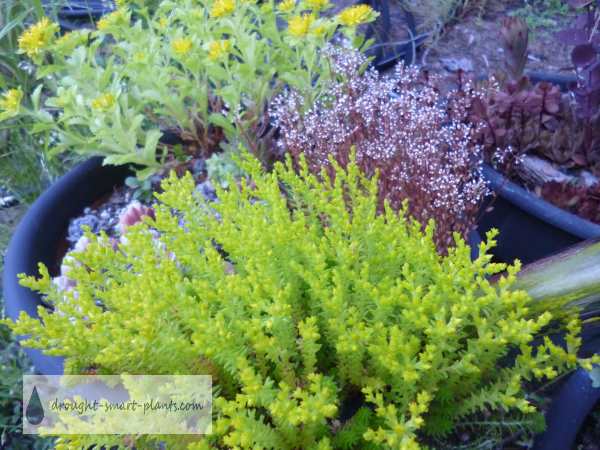
Many hardy succulent plants such as border Sedum form a huge clump of roots, eventually becoming so root bound that the vigor declines.
Division of the clump will rejuvenate the original crown and give you lots more plants.
Be prepared by having either some willing recipients – other gardeners – of the result, or a spot in a tapestry bed or mosaic that needs another plant.
The best time to divide any perennial succulent plants is usually in the spring just as new growth emerges, although with Sedum it can be done at almost any time.
The clump should be dug out of the ground with a sharp spade. Slice down around the outside of the clump to cut the roots.
Lift the clump and put it in a wheelbarrow or on a tarp. Gently loosen and get rid of some of the soil.
Slice through the clump of roots, making sure you get at least one eye or growing point with each portion of roots.
Sedum and most other succulent plants don’t mind it they get dried out, but other perennials don’t appreciate it.
Prevent stress of the plant by having a bucket of water with some burlap squares to lay over the plant and the pieces you cut off. Work in the shade, not in full sun.
This way of increasing your stock of succulent plants will give you a lot of plants in a short time as well as the rejuvenation of the original stock.
Most perennials react to being divided by producing many new healthy shoots to take the place of the ones lost to the knife.
My Favorite Garden Tool
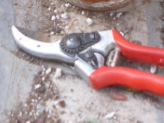
I use my trusty Alligator spade, a long thin trenching shovel, with a serrated blade. Any tool you use should be sharp so as to cut through the roots cleanly. See more about the best garden tools here.
Division of Rosette Forming Hardy Succulents
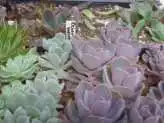
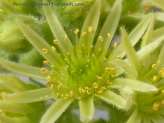
Although many hardy succulents such as Jovibarba and Sempervivum produce in some cases plenty of propagules or chicks, some species and varieties are stingy in their chick production. These types benefit from division of the rosette, using similar techniques to the splitting of Jovibarba heuffelii.
A carefully prepared rosette can be split into four or more parts, each with a portion of the crown and several rootlets.
Over the next season, the cuts will heal and make new roots, and due to the stress of the surgery, each crown will often produce lots of chicks. So, not only do you have four plants instead of the original one, but each one will produce the same number of chicks.
For impatient gardeners, all these methods will quickly increase the numbers of the plants available for trades, sale and planting in succulent crafts and xeric gardens.