
Name that Plant
Your memory is no match for time; no matter how sure you are that you’ll remember the plant, as time goes by, you’ll forget.
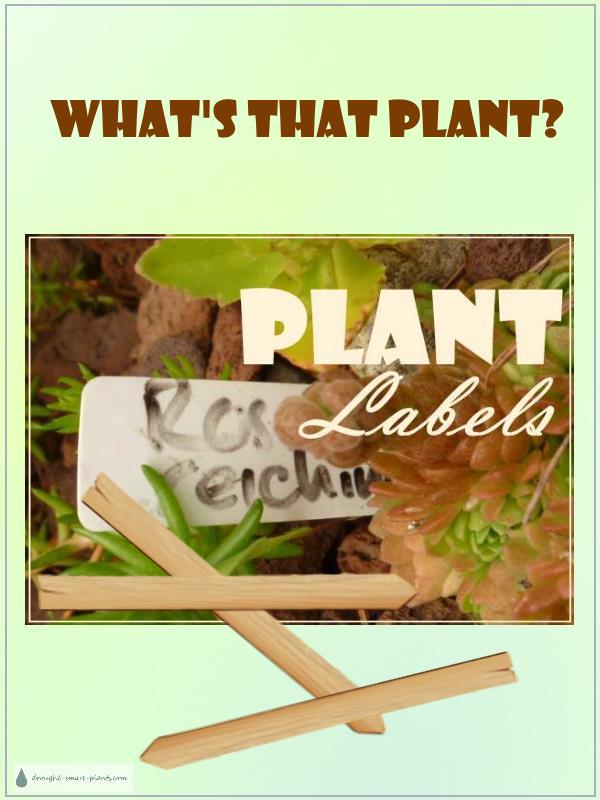
Here are a few ways I’ve labeled plants in my garden; some are more fool proof than others.
Your memory is not a match for time, and neither is the ink in Sharpie markers. I get the industrial kind, which lasts longer but it still wears off in the weather.
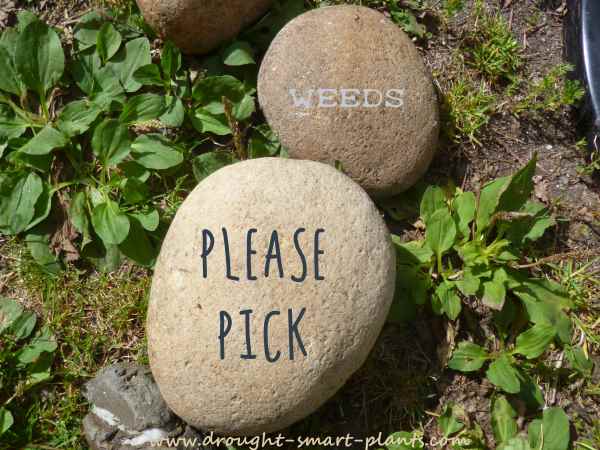
Sharpie pens don’t write very well on rough textured materials like stones, but they sure are cute.
I might use smooth river stones with acrylic craft paints, and then a top coat of urethane to protect them from the elements.
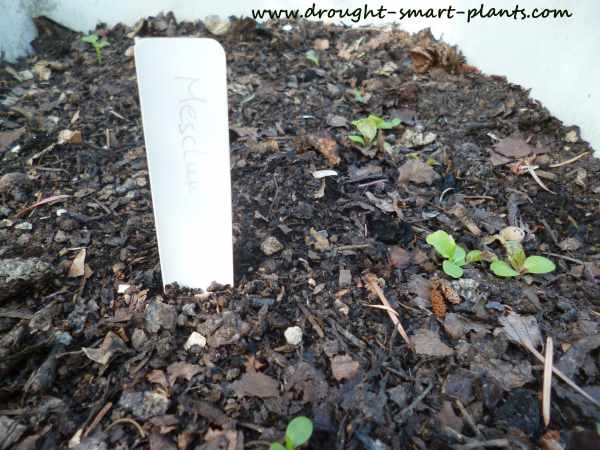
Venetian blinds are a common way (and very economical) to label plants – pencil is a good and indelible way to write the names. The slats can be cut with a pair of kitchen scissors as an added bonus.
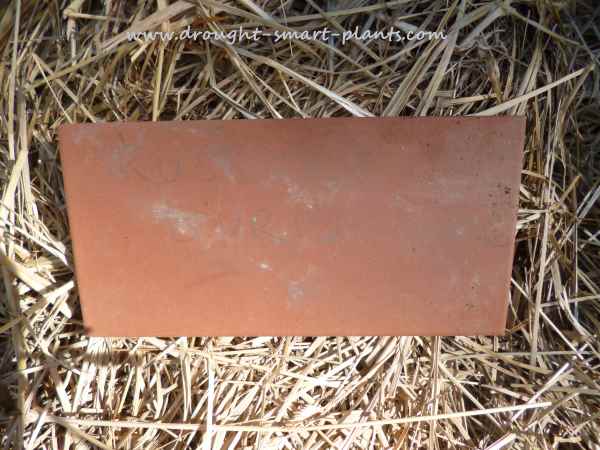
Smooth tiles make good markers – pencil actually lasts longer on those too so that would be a better option than Sharpie pen.
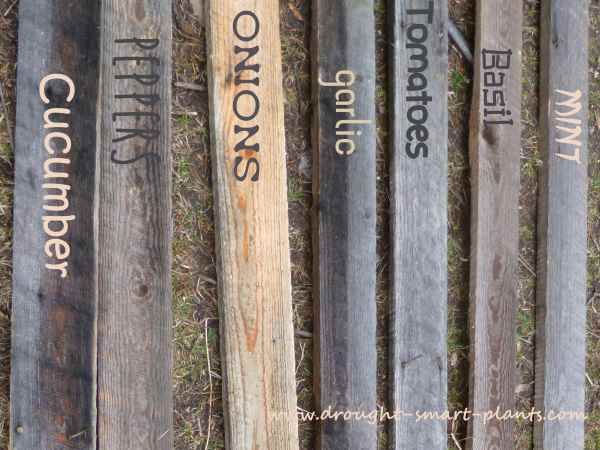
Cedar slats or lattice is a way to mark the rows before the vegetable garden emerges from the seeds you plant. This mock up of wooden boards shows what they might look like (in an ideal world!)
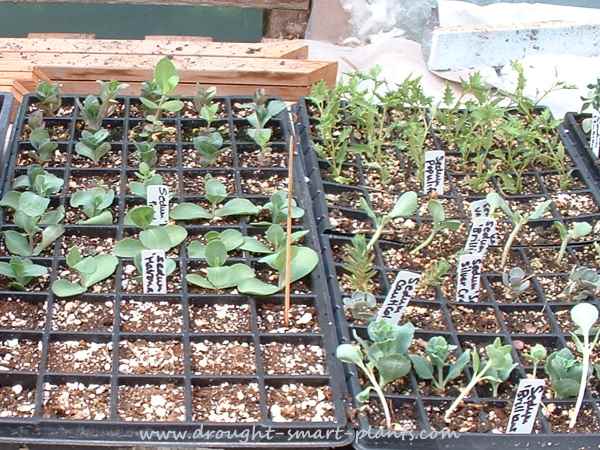
In commercial nurseries, good labeling is crucial, especially when you’re hiring people as your labor force who may not know the plants themselves. In most nurseries I’ve worked in, a percentage of the plants is actually labeled individually, and then a larger stake type label tags the bed.
New stock plants are especially important to label correctly; until I know the plant well, they all look alike.
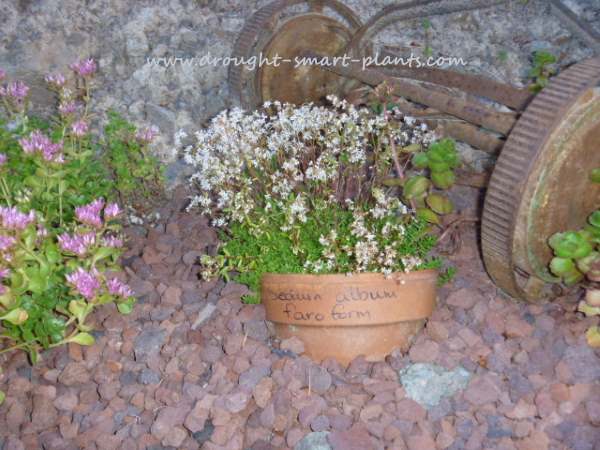
Terra cotta pots tend to fracture; use the shards for labels with Sharpie pen lettering. Keep in mind that this is very fragile clay, and continues to shatter in the weather.
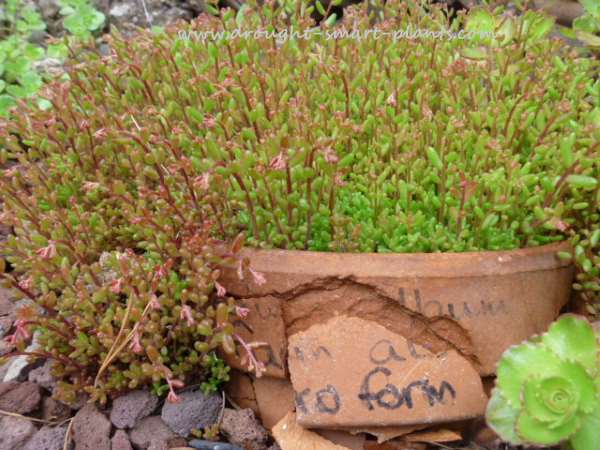
Two winters later, the pot has almost completely fallen apart – back up your fragile plant labeling system with some plastic labels buried beside the plant for future reference, and map out your garden with the correct names, just in case.
Whatever your plant labeling system, be consistent, and have fun with it.