
Learn to recognize your plants
Plant identification depends on several factors; ranging from botanical descriptions of flower form, leaf construction and size of the plant to details such as colour of blooms, texture of the leaves and stems and appearance of flower stems and seed pods.
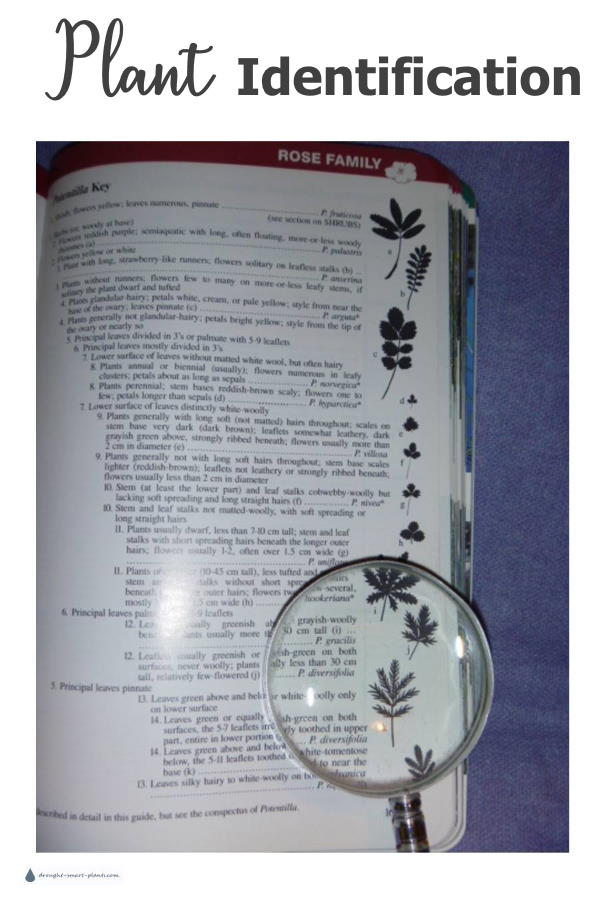
All these characteristics combine to form a specific key to identify individual plants.
Botanical field guides have a key system for identifying plants where each particular characteristic which can be used to pin down the exact plant is listed.
In my experience the best way to learn to identify plants is to get to know them – then just like good friends, you’ll recognize others in the same family, or even the same one in a different phase of growth.
Plant identification is an art, and like most art forms, becomes easier as you gain knowledge.
Learning how plants grow, the different ways that cultivation or the growing environment affect their appearance, and how similar plants can be identified by comparison to each other is a life long quest.
For example, there are many species and named varieties of Sempervivum, running the gamut from tiny fingernail sized to those bigger than a dinner plate; ranging from soft and covered in down or cobwebs to shiny and glossy.
Colours can be palest white to darkest midnight purple, and every shade in between, changing with the season.
Identification of these plants is relatively easy once you’ve grown them and propagated many different forms, at least to the limit of identifying the genus and species; named cultivars not so much.
There are some other plants so similar to Sempervivum that even experienced growers can be fooled.
This includes other hardy rosette forming succulents such as Jovibarba heuffelii.
The differences then are limited to flower shape, the Sempervivum flower being star shaped and held upright, and the Jovibarba bell shaped and hanging down.
In certain seasons other aspects such as growth pattern, colouring and general appearance the resemblance is amazing.
Many other plants have similar problem in identification. With luck, other growers have the same plant which has been reliably identified and you can compare a tagged plant with yours.

And, of course, there is the issue of the experts (botanists) who change the names of plants seemingly without a reason.
In some cases the accurate names of some varieties and species of these kinds of plants can never be completely nailed down, as there are hybrids, genetic mutations and throwbacks, and regional natural varieties and forms in the trade, and even those grown in the garden can cross pollinate with ease.
Plant identification is essential for determining the best conditions to grow a certain plant in, and its likes and dislikes.
For example, Echeveria as a group dislike an alkaline soil, so it’s important to pot them into a soil that contains very little.
Knowing if the plant will grow in shade, sun, damp soil or dry conditions will give you a head start in successfully growing these fascinating, correctly identified plants, with plant labels, in your garden.
How do I identify a plant? The first step is to look closely at the formation of the leaves. Are they opposite? Alternate? Pinnate? Rounded? Sharp?
This can often get me started on an identification. Then, often, I can make an educated guess on the genus.
That’s when the fun begins. I use Bing as my search engine of choice, and input the name of the suspected genus of the plant, and choose ‘images’.
Looking through all the pictures can prod me in a certain direction, and often, if I look through their section on ‘what others have searched for’ I could find a potential match. This is not easy or quick. I sometimes spend hours looking things up, following the trail down the rabbit hole.