
by Cyndi
(Los Angeles)
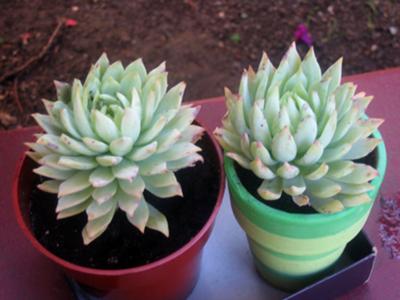
mystery succulent plants
I adopted 5 of these plants and would like to know their name to properly care for them. As it is, most already have brown spots.
Thick fleshy tender leaves that taper to a point but is not sharp. Baby leaves are so plump they’re almost round. Spherical rosette formation. Leaves tend to curve inward and some are tinged with salmon color.
Thank you so much!
Drought Smart Plants reply:
Your succulents are in fact, Echeveria – I’m not 100% certain which one, but there are many similar, all gorgeous and easy to grow given the right conditions.
If they have brown spots there are several possible causes. I suspect the plants have received some damage from being handled, or even from heavy rain, which in itself is normal, and they will eventually outgrow it.
More seriously is the fact that the plants look to be in regular potting soil with no additional drainage material such as small gravel, perlite, pumice or crushed lava rock.
You can take these guys out of the pots and remove some of the existing potting soil and repot into something similar to my favorite soil, Sunshine mix #4 with it’s extra fast drainage.
The most important point here is that you don’t water them after repotting! Let them dry out for at least a few days to a week to let the wounds heal and callous. It’s hard to do this the first few times, but I promise you, it will be fine.
Jacki
Wanting to learn more about Succulent Plant Propagation?