Pebble Plants, Split Rock and Living Stones – Plants in Disguise
Lithops are an amazing plant – yes, I said plant. I know, they don’t look like one!
They are called living stones for a good reason. They look just like a couple of pebbles, and this camouflage prevents hungry, thirsty animals in their native South Africa and Namibia from gobbling them up during a drought.
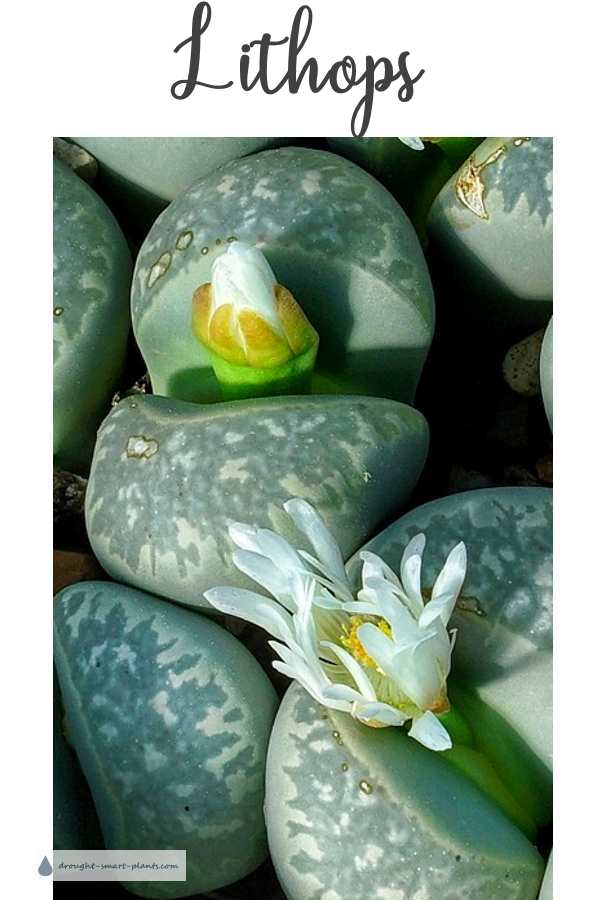
They have several other interesting survival strategies to help them withstand challenging conditions; one they use during a prolonged drought is to burrow down into the soil leaving just a tiny portion of their special window showing.
This window is a clear area on the top of the truncated or shortened leaf through which they allow light in to be photosynthesized.
They also have a long taproot to enable them to reach any moisture lower down in the soil layer. In cultivation, they’ve been known to live for over fifty years.
There are many different colourations in Lithops. They range in colour from almost white, grey, pink, purple, beige or smoky green.
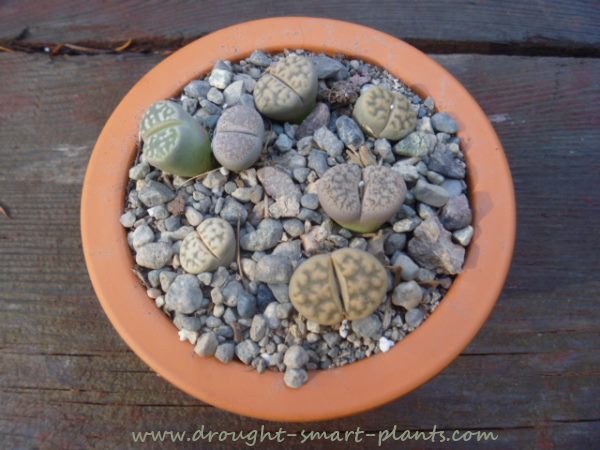
They have varying patterns to enable them to more closely resemble a small stone, hence the common name of living stone or pebble plant.
This, and the fact that they’re so slow growing, makes for a fascinating hobby – you can collect from among over two hundred differing types and species.
Because of their small size, you can fit a lot of Lithops in a small space – a bright windowsill will hold an extensive collection.
Blooming Lithops
An amazing thing happens when Lithops bloom.
A flower will emerge from between the two fat little leaves, and gradually over the span of a few days, open into a large white or yellow daisy like bloom.
This is usually in autumn or winter and is dependent on the amount of light a plant receives in the spring and summer.
A three year old plant will commence blooming with slightly spice scented flowers.
Care of Lithops Plants
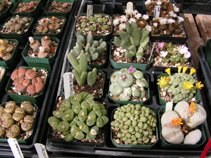
Lithops are not a hardy succulent plant – they cannot stand any temperatures lower than 4 degrees Celsius, but can withstand a lot of heat, a legacy from their native habitat.
They must have a dry dormant period in winter and early spring, until they completely rebuild their body.
During this time they should be kept cool, but not allowed to freeze. Then the old shriveled parts can be removed, and you can water again.
Watering – Especially Important!
When watering, the soil must be thoroughly soaked through, then allowed to dry almost completely.
In late spring or early summer, they must be allowed a dry dormant period again to rest, after which they will begin growing.
This dormant period is important for the health of the plant, so make sure they won’t accidentally get watered with other summer growing plants in your collection. They also need good ventilation at all times.
Light Requirements for Lithops
Light should be bright, but avoid full sun in a south facing window as it can burn the plants.
Soil for Pebble Plants
Preferred soil is very well drained, either a cactus mix specifically blended for cactus, or something like Sunshine Mix #4, which has added aggregate, and add even more pumice, lava rock or small gravel. Additional drainage is a good thing.
Lithops don’t need any fertilizer, so don’t worry about the addition of nutrients. They really do prefer a lean soil.
Lithops Propagation
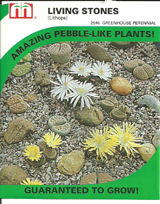
Lithops are easily grown from seed, collected from the daisy like blooms from your own plants, or purchased.
Seed should be sown in well drained soil, with added grit.
Water with a fine spray, keeping them constantly moist until they germinate and for a while after.
Contrary to popular misconceptions, only the adult plants are drought tolerant – as young plants they require even moisture.
Keep them out of reach of mice and chipmunks, who just love their tender succulent new growth. I lost an entire seedling crop one year from their visits.
Newly germinated Lithops seedlings are only about 3mm across after a week or two. In less than a year they will be showing their adult colouration and will be ready to pot into separate pots.
Learn more about how to grow Lithops here.
See more Pebble Plants and Living Stones here;
There are other stories linked below…
Unknown 2×2 Succulent?
This little guy is awesome! It has grown wonderfully in the two weeks since I bought it. It is such an interesting succulent and seems to thrive inside …
Proudly South African
Seeing that there was a discussion about Mesemb Titanopsis I would like to show you what mine looks like. (This is a link to the discussion: Titanopsis …
My wee beauties
My lithop, and friends, need a little help identifying them perhaps, the biggest is definitetly a split stone, but the other two I’m not sure of. …
green lips in a flower pot
Weird as all get out and very small. About 2 inches high. Came without a label or any care instructions. Any ideas? Thanks! Hi Hannah, this is either …
aren’t these cute??
I’m not sure if these are succulents or even plants for that matter, but if you can identify them then I’d love to have one! Hi Natalie, these are …
Purplish green baby plant with thick “leaves”???
It’s very purple right now…when I got it I think it was more green, and it looked like a cute opened mouth. Now it has a new mouth growing out of …
Hemispherical lobes that open to reveal two similar lobes
About two-inches in diameter. Green. Blossoms once a year from a central stem to a yellow bloom. Rescued from close-out rack. Hi Steve, it looks …
Grey Smooth
I bought this awesome plant, but I don’t know how to take care of it, or even what it is. The label only says “1” Assortment Cactus Plant”. It’s grey …
Pleiospilos nelii
I purchased a split rock plant in a 2″ last month. it is now in bloom and just wonderful except I noticed that the outer ‘stones’ are shriveling up; is …