
The Easy Way to Make a Sedum Tapestry
As an Amazon Associate I earn from qualifying purchases.
Other links on this site may lead to other companies that I’m associated with.
My latest lasagna bed project is a resounding success.
I’ve made many demonstration gardens at Blue Fox Farm since 2001. These gardens provide insight into the demands of the climate on Drought Smart Plants, and how to grow them in very challenging conditions.
This area is rocky, sandy, mountainous and dry, and yet, I manage to garden quite successfully by using lasagna gardening techniques.
Projects that would seem impossible become easy with the techniques I’ve learned over the years gardening here. The most important features of many of my gardens are the rocks.
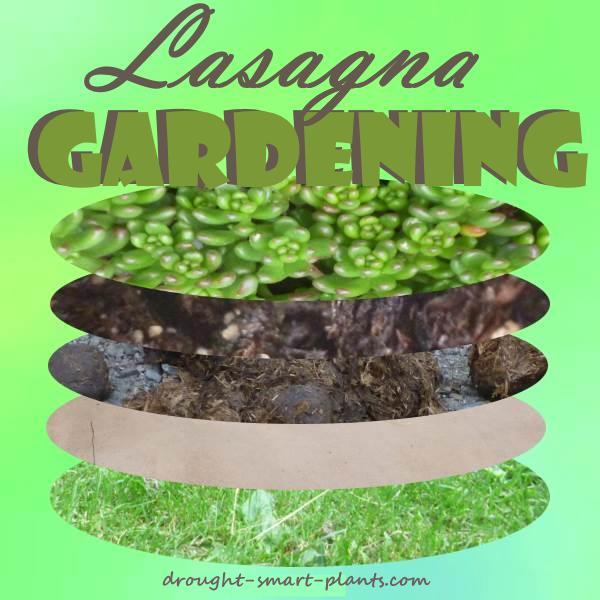
I use them everywhere to make terraces and rock retaining walls and fill them with the sandy gravely soil layered with compost and steer manure, leaf mold and sawdust.
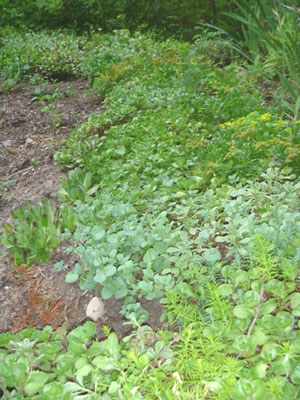
Eventually, everything amalgamates into a friable, black soil to grow many perennial xeric plants that love droughty conditions and great drainage.
Layering all the ingredients that go to make a good soil and letting the microorganisms and worms do the dirty work, now that’s a win-win situation.
It frees my time to make more gardens, or renovate the existing ones.
This lasagna bed project began in the spring of 2010.
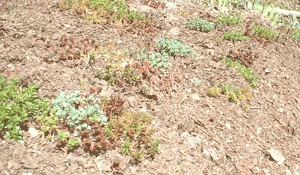
The final corner of the garden around the pond is in the process of being made into a Sedum tapestry garden planted with many different types of Sedum and Sempervivum.
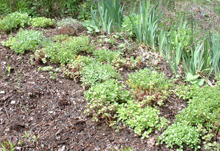
Getting established takes some time…
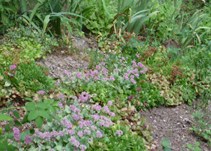
…but pays off when they bloom.
It’s in full sun for much of the day, and rocky and sandy under the carpeting of Carex and Arctostaphylos, so the less digging I have to do, the better.
The only place I had to dig is to get rid of the wild rose suckers and other native shrubs and for a pathway for access, using the soil removed for throwing atop the newspapers that are laid down to kill off the undergrowth. On top of that is a thick layer of compost, rich with leaf mold, black and nutritious.
I usually retain more of the sandy under-soil to grow Sedum and other succulent plants on but in this case, I wanted to see how much difference it makes in the health of the plants.
In this project I placed three or more sheets of wet newspaper to smother the existing growth of native groundcovers. Use more or less, depending on the type of growth that needs to be killed off – thicker layers of newspaper or even cardboard will be necessary for very persistent shrubby type plants or those with deep roots.
I shoveled the native soil from the pathway to hold the newspapers down which was then covered with the compost.
I planted flats of Sedum right on top.
After planting the Sedum and Sempervivum, I’ll mulch with lava rock, my favorite mulching material for succulent plants.
The combination of textures and colours complement each other perfectly, and in time the mixture of types will grow into each other and mingle to form a beautiful Drought Smart tapestry.