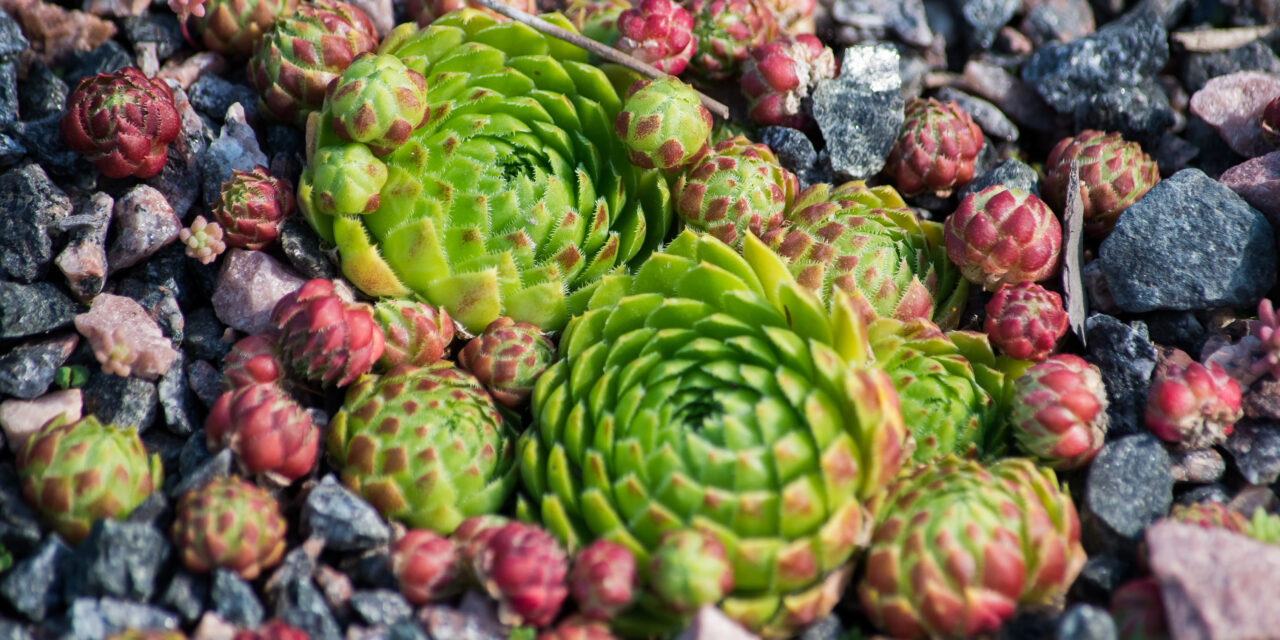
Jovibarba plants are sometimes called the ‘other’ hens and chicks. They are very similar in appearance and culture to the closely related Sempervivum as they both resemble a rose in form; the most obvious difference is the way the ‘chicks’ form.
Only three species are accepted as distinct by the Flora Europaea:
- Jovibarba globifera (syn. J. sobolifera; Sempervivum globiferum)
- Jovibarba heuffelii (syn. J. velenovskyi; Sempervivum heuffelii)
- Jovibarba hirta (syn. Sempervivum hirtum)
Jovibarba globifera and its subspecies (subsp. hirtum, subsp. allionii, subsp. arenaria) originate in the eastern and southern Alps, the Carpathians and the western Balkans south to northern Albania.
Jovibarba heuffelii occurs in the remainder of the Balkans and the eastern Carpathians, southeast of Jovibarba globifera.
Jovibarba hirta occurs further west, in the southwestern Alps.
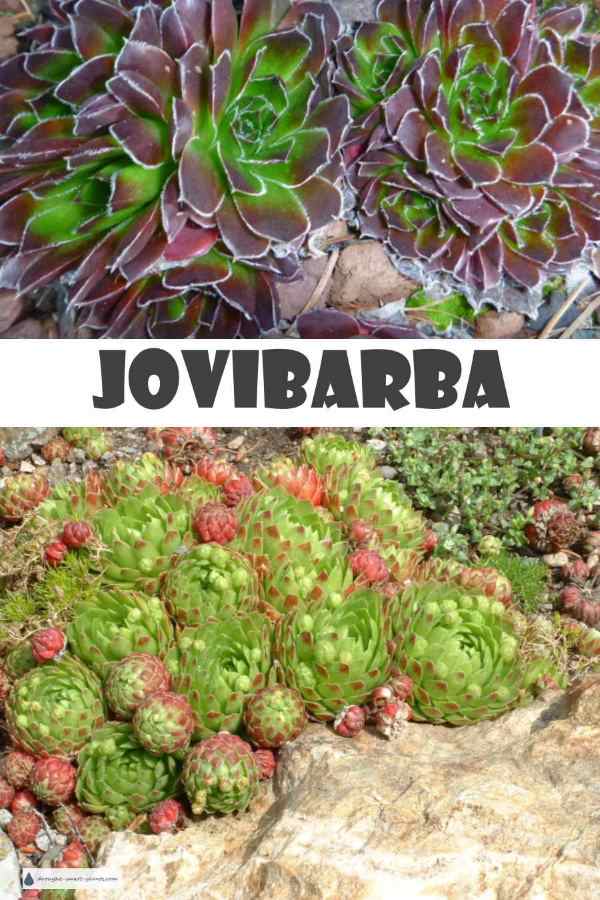
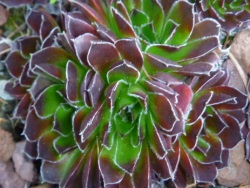
All three species are known in part for the burgundy tips on many of the leaves, especially the younger ‘chick’ plants.
Apparently, just to add to the confusion the Jovibarba have now been returned to their original genus of Sempervivum.
As is customary with the naming of plants, both names will be in general use.
Sempervivum chicks are attached under the hen rosette, or mother plant, but many Jovibarba species such as allionii, sobolifera and hirta hold them over top of the adult plant on delicate brittle stems which break easily, making it possible for the chick, or ‘propagule’, to roll away to find a place to root, giving rise to their other name of ‘rollers’.
Learn more about how to grow Jovibarba species here.
Jovibarba Variety And Uses
They come in all colors, ranging from palest taupe, to aqua with darker tips and edges, to bright apple green and mahogany. Sempervivum flowers are similarly varied, and come in a range of colors. Most have green leaves, at least partially or in some places in the plant, but not all.
Find out all about how to grow Jovibarba heuffelii with details about propagating them.
What’s the difference between Sempervivum and Jovibarba?
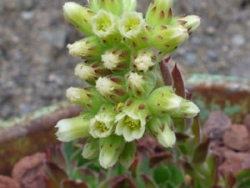
The other major difference between Sempervivum and Jovibarba is that the flowers are tiny downward or outward facing bells rather than upturned star shaped blooms.
After the bloom has finished, the rosette dies. This is called ‘monocarpic’ or once-blooming. It also means that it’s important to know your USDA zone to get the plants to flower. Most species are hardy for USDA zones 8-12.
Seed propagation is one way to get lots of new plants – collect the drying seed pods after the plant flowers and place them in a paper bag, or seek out seeds online from specialty seed houses.
Seeds will generally propagate well in almost any succulent plant pot. If you give them room to spread, either in the pot or with outdoor planting, you’ll be able to see why these plants are called hens & chicks.
An alternative way to propagate these succulents is just to let them grow in good conditions. The larger mother plant, or hen, will eventually generate baby plantlets, chicks, near the base of the mother plant.
As the chicks get larger they will either become mother plants on their own, or they will
Interesting ways to use Jovibarba
Plant among the stones in a rock retaining wall, or as succulent groundcovers in your xeric garden in a tapestry bed. The roots from these plants can take advantage of small crevices, and are used to gravelly soil, so you can plant them even in places where other plants won’t grow.
Rock gardens and crevice gardens are fabulous planted with a single species or a mix of the many varied forms of these fascinating plants. Just be careful, most succulents, Jovibarba species included, don’t like having wet feet or wet roots. Limited soil actually works better for these plants, since too much high quality soil can retain more water than the roots can handle.
As they spread, the textures and colours of these plants and their flowers become more and more beautiful, like an antique quilt.
If you’re patient enough to wait until you have enough, succulent wreaths or succulent mosaics are fantastic ways to grow them to show off their many colours and forms. Jovibarba are gorgeous planted in a trough garden which suits their preference for excellent drainage.
Good jovibarba care does include thinning out richer soils to make them more suitable before planting. Adding pumice stones or perlite to the mix can help reduce the risk of root rot and other common problems. You can also mix in sand or other fillers to improve drainage and reduce the risk of root rot.
You don’t want to use a richer potting soil for Jovibarba or any succulent species. These plants have evolved to grow in harsh climates and soil that isn’t suitable for other species. So they can actually be damaged by richer soil, too much fertilizer, and many of the growing conditions that leafy green plants prefer.
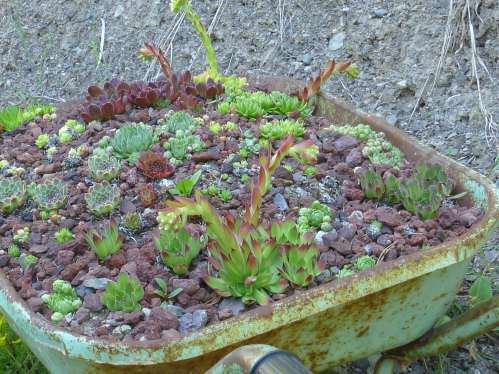
Jovibarba, along with other succulents in a wheelbarrow gives a fresh and cheeky look to your garden display and keeps these precious jewels up out of harms way.
I make succulent spheres, and Jovibarba globes to display these interesting and versatile succulents, as well as planting them in hypertufa pinch pots and other hypertufa creations. These plants are suitable for drier terrariums, and tolerate partial to full shade indoors relatively well.
All these species are little known except to collectors, but I’d like to change that as I’m fascinated by the form and tenacity of these drought smart plants. Plus, the combination of greens, pale yellow, reds and other colors is particularly rewarding in your planters or rock gardens.
Maybe you feel the same way and would like to grow some of these unusual, colourful and rare hardy succulents in your xeric garden. Or maybe you’re looking for a succulent that will readily spread to help cover bare patches in your garden and doesn’t need a lot of close care and attention.
If you want to create a beautiful patch of succulent bliss, different varieties of these succulents do a great job! The only problem is that it can be difficult to find more than one or two varieties in most garden nurseries and supply stores.