Faux Troughs and Rustic Garden Art
As an Amazon Associate I earn from qualifying purchases.
Other links on this site may lead to other companies that I’m associated with.
Hypertufa crafts can be so much fun to make, and they’re perfect for growing and displaying hardy succulents like stonecrops and hens and chicks – here’s where you can find out how to make hypertufa, and how to use your unique garden craft when you’re finished.
On this page, learn about:
- Safety issues when using Hypertufa;
- …tips and techniques,
- and ideas for crafts to make with this fascinating material…
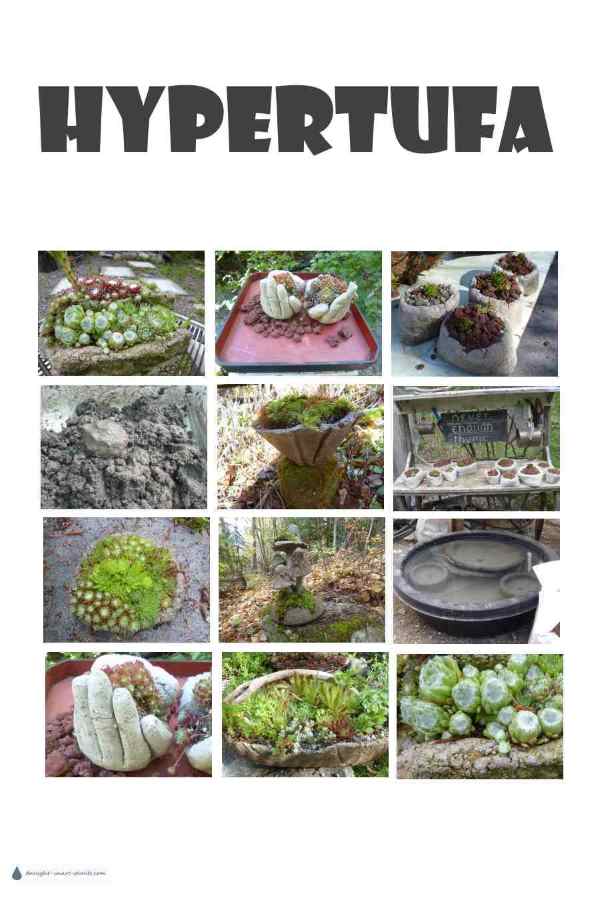
Hypertufa refers to a mixture of cement powder, peat moss and sand (sometimes other ingredients as well) formed into a mold or built by hand to make planters for alpines, succulent and rockery plants.
It’s copied from a type of natural limestone rock called ‘tufa’ which is hard to find and very expensive, but valued by growers of alpine plants.
See this White Paper for a tongue in cheek look at some potential new names: My Take on Hypertufa.
Tufa is a limestone rock soft enough to carve with simple hand tools, to make holes to plant special treasures such as Jovibarba, Sempervivum and other rare alpine plants. Here are instructions for making hypertufa – it’s like making mud pies!
Hypertufa Safety Tips:
- Wear your oldest play clothes with long sleeves and your legs covered in case you get concrete on you as it’s caustic.
- Wear disposable plastic, rubber or vinyl gloves as the cement can cause burns.
- Wear eye protection in case it splashes on to your face.
- Wash all tools and containers with lots of water after you’re done to prevent the concrete from hardening on wheelbarrows and other tools used to mix the hypertufa.
Making Hypertufa
Mix one part by volume of each of the following:
- Cement powder – sometimes called Portland cement. Don’t use the pre-mixed mortar as this already has sand in it and will throw off your proportions.
- Peat moss – sometimes called sphagnum peat moss. Sieve this through 5mm (hardware cloth size) mesh to remove twigs and large clumps.
- Sand – use builders’ sand, not beach sand.
Need Some Supplies For This Project?
Add water to mix to a consistency of peanut butter (plastic and malleable). The test is if it holds its shape when you make it into a ball, and won’t crack if dropped back into the mix. Then you’re ready to start playing.
You can form this by hand to whatever dimensions you like, usually no larger than 30cm x 40cm (1′ to 16″) and about 20cm (8″) high.
Avoid building it any larger than this as it will be too difficult to move without the danger of a hernia, or damage to the pot.
Other hypertufa recipes recommend using perlite and fiberglass reinforcing strands, or a small amount of hydrated lime (not dolomite lime), about one cupful for a wheelbarrowful of mix.
How to use Hypertufa
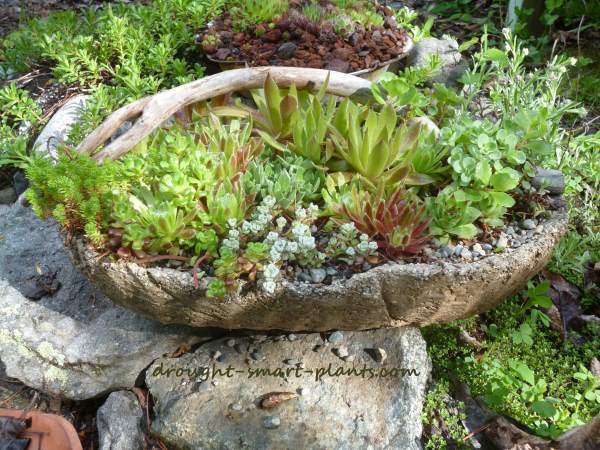
A form created out of a pile of sand and lined with plastic film can make some fantastic free form planters.
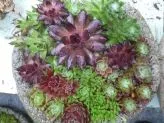
Hypertufa pinch pots make exquisite jewel like planters for many rare hardy succulents and Jovibarba.
This commercial nursery makes lots of the shallow free form types of containers to sell filled with Sedum and Sempervivum.
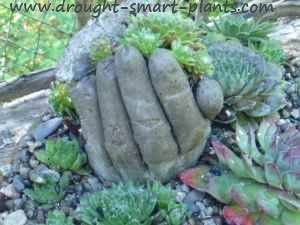
Other unique containers are Hypertufa Hands – click on the picture to find out more about making them on the sister site, Blue Fox Farm.
Remember to make drain holes in the bottom of your pots, or arrange another way for excess moisture to drain away.
A more complicated form can be built out of cardboard boxes, nesting a smaller one on a base of hypertufa mix inside a larger one, leaving a gap of about 4-5cm (2-3″) in between to fill with the hypertufa mix.
Build this on a concrete floor – a garage or a basement works well – lined with plastic film. Make sure you put a short wooden dowel or two in the base to make drain holes.
You can use hypertufa to cover a Styrofoam cooler or fish box to make some really great, lightweight troughs to plant your hardy succulent plants in.
Another fun way to use hypertufa is making rhubarb leaf stepping stones.
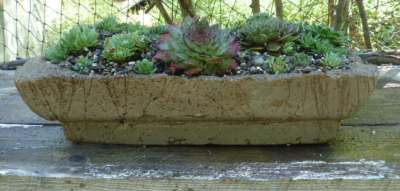
Cover your finished planter with more plastic film to dry slowly, uncovering it for an hour or so a day, until completely uncovering it by the end of a week.
It should be cured for a while longer without disturbance – up to three weeks – before filling and planting it. The important things to aim for are to keep it moist, either by spraying it daily, or keeping it covered to cure it.
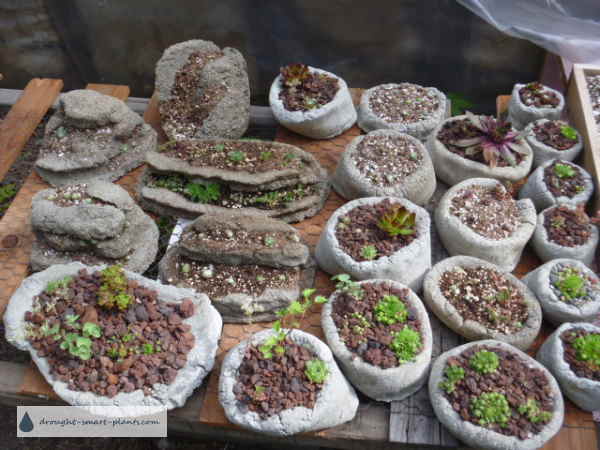
It’s often recommended to spray water mixed with a small amount of vinegar in to rinse the caustic alkaline lime off the surface.
I’ve never noticed if this makes any difference, and if you have peat in the mix, this will achieve the same result.
Sometimes it takes a few experiments to fine tune the mix, depending on differences in your local ingredients. Make smaller hypertufa projects first to figure out the best proportions before tackling a trough.
You can also make ‘rocks’ with this mixture, with holes to plant small succulents into, shallow bowls for moss gardens, and decorative balls studded with shards of broken tile or glass or hollow balls to plant more hardy succulent plants in.
Due to the fact that peat moss is not a sustainable resource, some hypertufarists are experimenting with sawdust, wood shavings, coir and other materials to replace the peat moss in their art.
Care of Your Hypertufa Creation
Age your hypertufa with sheep manure mixed with buttermilk to make a slurry to paint on the surface, to encourage lichens and mosses to grow.
Most hypertufa will be best stored in a dry place for the winter to prevent frost cracking.
Remove soil and plants before storing, and heel the plants in the garden, or if they’re tender succulent plants, take them indoors.
If the hypertufa is too heavy to move, simply cover with plastic film to prevent it getting too wet with the winter rain and snow. Make sure it’s on loosely enough so that your plants can survive.
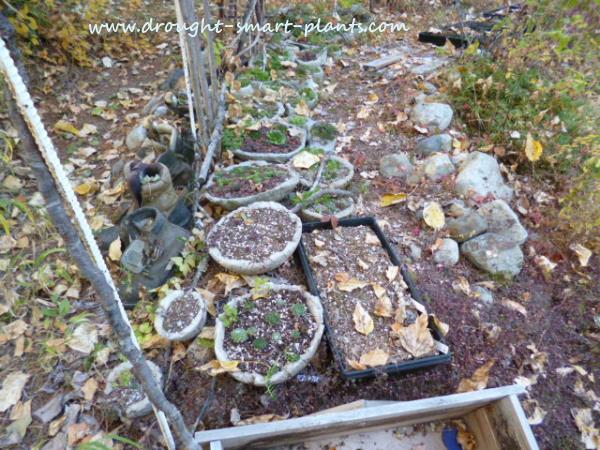
Looking for more inspiration and ideas? Check this out:

Wanting more of this kind of information about Hypertufa? Buy the Manual!