
Slow Growing Unusual Succulent House Plants
Gasteria are some of my favorite succulent plants. Although only superficially similar to Aloe, they are genetically related; in fact so closely that they are able to interbreed and form a generic hybrid.
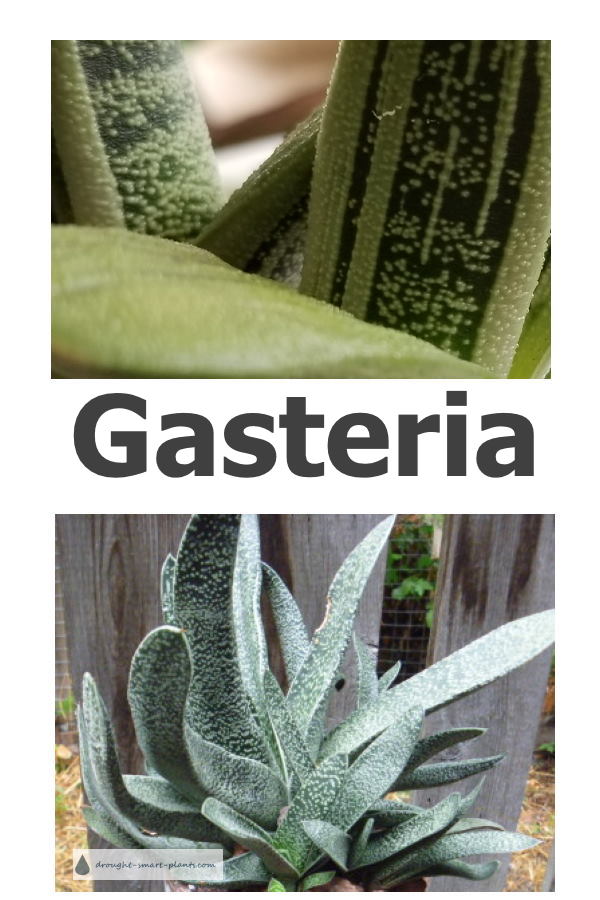
Most plant hybrids are crosses between species in a genus, not crosses between genera.
These are usually denoted by an ‘x’ in front of the name, as in x Gasteraloe, an intergeneric cross between Gasteria and Aloe plants.
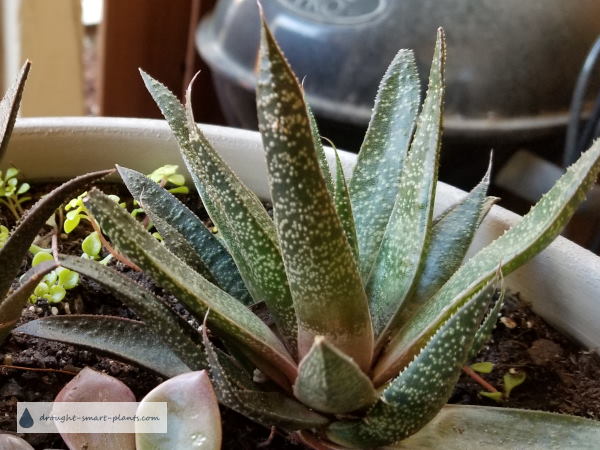
Gasteria are so named because of the resemblance of the pouch-like flowers to a stomach.
The blooms dangle from a curving spray usually in shades of pale pink to peach coloured.
Some of the members of this genus have smooth textured leathery foliage like Gasteria brevifolia; others are spotted and speckled with protruding bumps, such as Gasteria verrucosa.
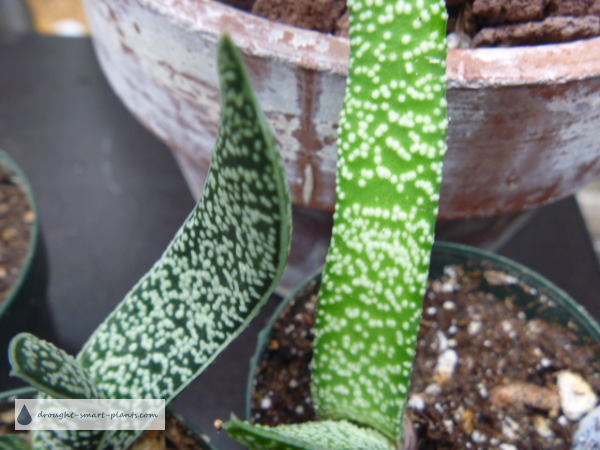
The foliage is formed in a fan shape of thick leaves, each one emerging on opposing sides of the center of the fan.
Eventually, clumps of these fans will form.
The roots of Gasteria are fleshy and thick, and most of these interesting plants are extremely drought tolerant.
In fact, they dislike winter watering with intensity, so completely withholding moisture during the cooler months is essential.
They only require repotting every two to four years, preferring to be quite root bound – I recommend using a heavy pot, such as those made from terra cotta because these plants can be top heavy.
They combine well in a collection of other succulent house plants in a group or mixed planter as long as you can cater to their special winter care.
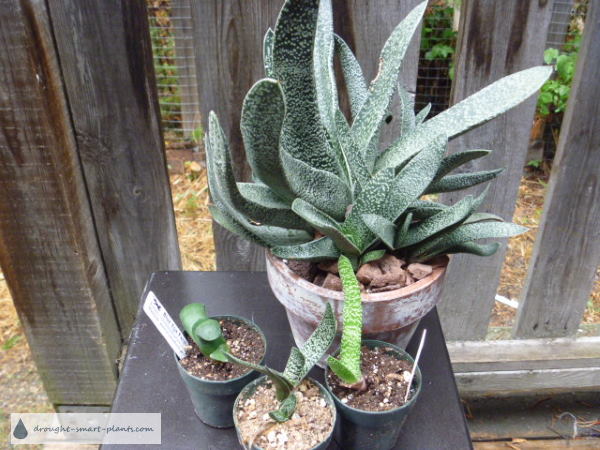
Propagation is by removing pups, which form at the base of an older plant. Easy to remove, they usually even have some of their own roots, so they establish quickly.
They will bloom only in old age and when root bound, so don’t expect early flowering in this genus. Luckily, their fleshy and leathery leaves are a good foil for other plants, so their rare bloom cycle is an unexpected bonus when it does finally occur.
The brightest light available, ample moisture in the summer and periodic repotting will give these slow growing plants their best chance at survival.
Add a few Gasteria to your succulents collection for their contrast with other rosette forming succulent plants.
See more about Gasteria here:
Other visitors have asked about these interesting plants too.
small “2 dimentional” succulent
It is light and dark green with leaves growing only out to the left and right. I love these guys! The fan shape is characteristic of young plants, …