
Images of Gardens for inspiration and ideas
Garden pictures taken throughout the seasons will give you a valuable record of xeric garden projects, planting schemes, and combinations of plants, successful or not.

Close up or macro digital photographs of Sempervivum or other plants can catalogue the changes they go through with the seasons, as shown in the Sempervivum Picture Gallery.
Taking pictures of the progress of your garden projects gives a sense of accomplishment as you see the changes over the seasons.
Freeman Patterson, a garden photographer of note says in the photographers foreword of In a Canadian Garden, (ISBN # 0-8478-1145-X) that during the task of taking the wonderful garden pictures shown in the book he could occasionally be found curled up under a bush for a nap waiting for the light to change.
He states that his preferred times to take photographs of gardens are either dawn or dusk, as the pearly light illuminates the plants better than in the full light of day.
Lovely gardens can be simple, with organic shapes planted with only a few plants so that the repeating forms echo and resonate throughout the space.
For taking close up flower photographs, camera settings are an important factor.
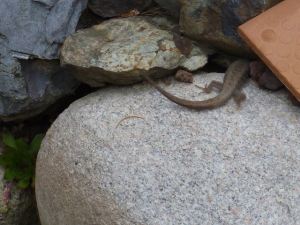
Most new digital cameras have a macro or close up setting so you can zoom in and focus on a single bloom, an insect or reptile.
You have to move quickly, or lose your shot when your subject scampers away.
Succulents don’t move too fast for taking their picture; find out more tips for photographing them.
A convenient feature of digital cameras, as opposed to their forerunner the film camera, is that you can instantly check your garden pictures, change settings and compare the results without waiting to have film developed, a delay in which you will forget which of the tested settings is the one to use.
Sharing your digital garden pictures is a recent phenomenon, made easy by the likes of flickr, you tube and many forums and chat rooms.
Taking good (ie in focus, with attention to the background) garden pictures to share will increase the enjoyment of your garden and allow others to join in the excitement.