

by Jacki
(Grand Forks, B.C. Canada)

Dragonfly nymph case left after hatching, still clinging to reeds

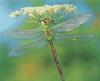
Dragonflies look pretty dangerous – they are big and fast, and change directions on a dime. Imagine many millennium ago when they were the size of a Volkswagen beetle. The fossils say they had wingspans of meters. Luckily for us, they are a lot smaller today.
There are many different kinds, but they all have similar wing designs. The two pairs of wings are held out sideways, even at rest. The bodies can be green or blue in the largest ones, and red, yellow, green and other colours in the smaller types.
They all require water at some time in their lifespan. Although the adults fly, the nymphs of most species live in still water, and if taken out of it, will die within a few minutes. Their diet consists of mosquito larvae and other tiny water insects.
Watching the nymphs hatch is very interesting. They will crawl up out of the water where they have lived for one to three seasons using reeds or other water plants, then the back of their casing splits open to reveal the adult with wings still soft. They stay for a while to pump up the wings, and dry in the sun, then off they go.
The females stick close by their pond, and the males will track back and forth over trees, rooftops or even black plastic lying on the ground. They patrol steady, catching other insects on the wing.
Their zigzagging flight is the epitome of a hot summers day; but not only beautiful to look at, they’re fearsome predators with strong jaws. So, maybe they’re aptly named. At least we have to be thankful that they don’t also breathe fire…