
As an Amazon Associate I earn from qualifying purchases.
Other links on this site may lead to other companies that I’m associated with.
Cliff Gardens, Rockeries
and Alpine Screes with a Twist
Cracks and crevices in cliffs and mountain peaks give protection to many plant species. Alpine plants grow happily in sun warmed natural crevice gardens in a summer that may last only a few weeks in the high altitudes of their native habitat.
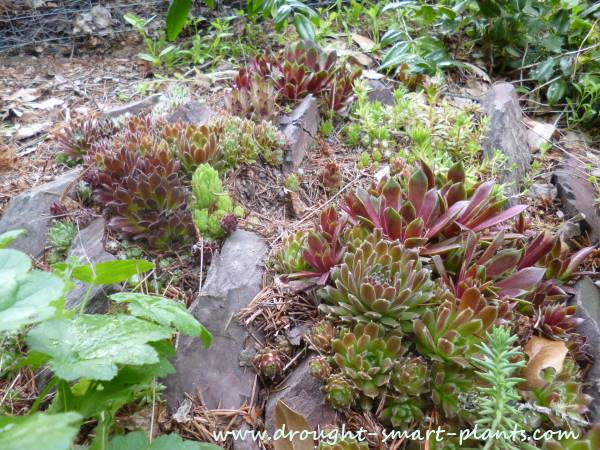
The solar heat absorbed by the stone lends a few precious days to the growing season, giving them just enough time to produce their seeds.
The roots of many succulent and alpine plants are far reaching, finding the tiniest amount of moisture deep in the ground.
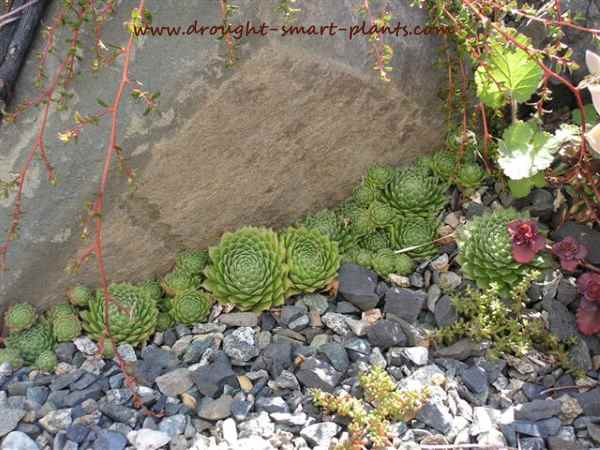
Planting them at the base of large rocks enables them to thrive in even the driest and most challenging of conditions.
The conditions of the vertical rock garden gives them the cool root run of the soil beneath the rocks, as well as perfect drainage.
You can tailor the soil, drainage and sun exposure to their exact requirements giving these precious plants the conditions they need.
The Best Soil for Crevice Gardens
The best soil for crevice gardens – as for rock gardens – is perfectly drained, although a light sandy soil is not necessarily best.
Building my Crevice Garden
I built a crevice garden using my favorite red sedimentary rock that is native to the area.
It’s fairly fragile and chips and breaks easily, but using it this way in a vertical orientation and with no load on it should stand up well.
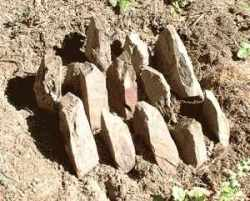
I’ve planted it with many different Sempervivum which will spread to fill each niche.
Use a layer of coarse gravel for drainage at the base of the rocks, then top with the amended soil.
Raising the growing area to emulate a mountainous region and planting the tiny plants or seeds in the crevices among rocks, or even hand built hypertufa slabs.
Crevice gardens made with hypertufa will look amazing once planted and weathered for a while.
Don’t have room for a full sized crevice garden? Why not make a hypertufa fissure to give you the same look in miniature? See more about hypertufa fissures on Blue Fox Farm.
Place your cliff garden in a scree or gravel bed mulched with shale or other rock to give the look of a true mountain peak, or take out some of the pavers of a patio for a pocket garden, making it look as though it’s erupting through the patio.
What Plants Do Well in Crevice Gardens?
The most important trait of moss and lichen or wildflowers and alpine plants is a dense growth habit, and they’re very drought tolerant.
Try some Lewisia or a collection of saxifrage for a very special jewel like display.
Building your own crevice garden can increase the growing room for a rapidly expanding Sempervivum collection, rare hardy succulents such as Orostachys and Rosularia, as well as many other flowering plants that usually are seen only in rock gardens.
Want to pick up your supplies today? Click here for some of my recommendations for a successful crevice garden. Build yours in a weekend or less;
A thin layer of granite chips will help maintain the moisture level, and also stop weeds.
Experiment with the soil you have that packs well, and add some chick grit for drainage. You don’t want the soil to erode out of the crevices exposing the roots.
The crowns of the plants need the protection from excess moisture so after you finish planting, mulch with gravel or Red Lava Rock if your garden experiences heavy rains. This will also stop erosion of the soil.